

Safe outdoor furniture moving is a process that combines thorough preparation, protective packing, and strategic loading to prevent damage throughout transit. Many families treat their outdoor settings as rugged and low maintenance, but wicker, painted metal, and timber finishes are just as vulnerable as indoor pieces. Moisture, vibration, and surface contact during a move cause scratches, warping, and mould if you skip the right steps. This guide walks you through every stage of the process, from cleaning and disassembly right through to securing your load, so your furniture arrives in the same condition it left.
What preparation steps should you take before moving outdoor furniture?
Preparation is the single biggest factor in whether outdoor furniture survives a move undamaged. Starting several days ahead reduces loading errors and prevents moisture damage from rushed handling. That lead time gives each piece a chance to dry fully after cleaning, which matters more than most people realise.
Clean and dry every piece thoroughly
Dirt, pollen, bird droppings, and trapped moisture all cause damage when sealed against furniture surfaces during transit. Scrub each piece with a mild cleaner suited to its material, then leave it in a dry, ventilated spot for at least 24 hours. Timber needs the longest drying time. Metal and plastic dry faster, but check joints and hollow sections where water pools.
Disassemble what you can
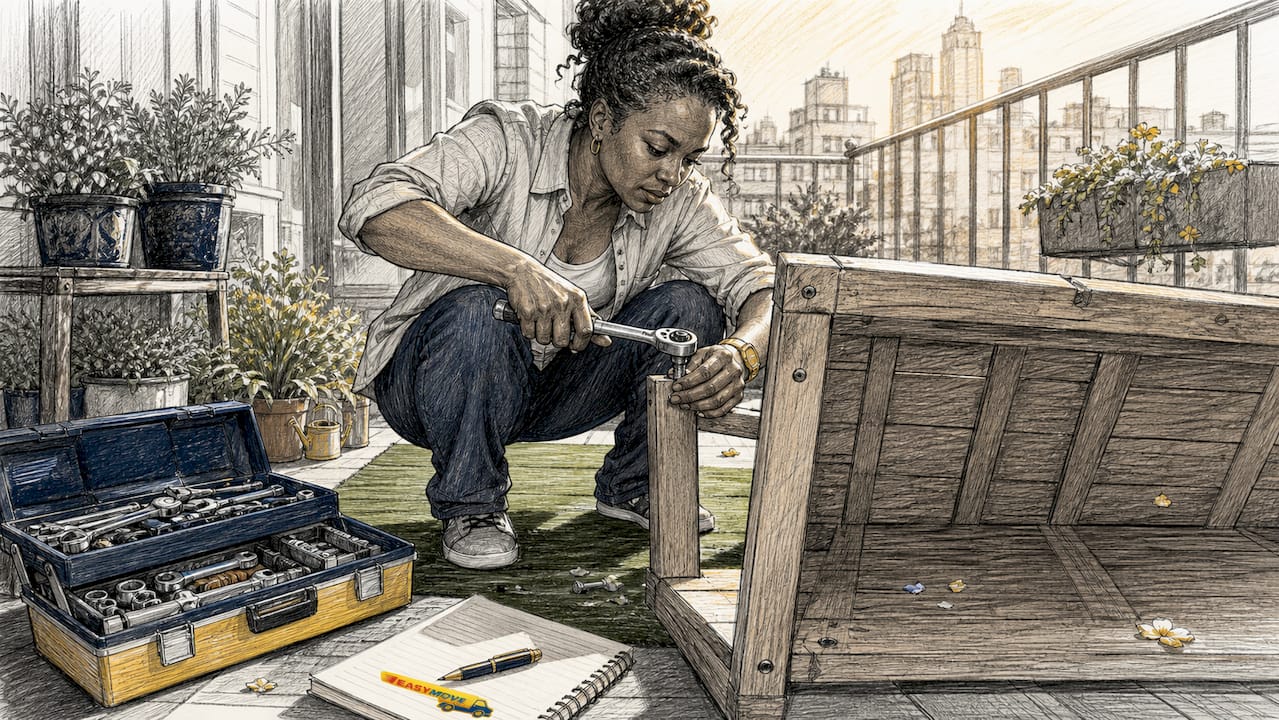
Remove legs, tabletops, shelves, and any detachable arms before packing. Smaller components are easier to wrap individually and far less likely to snap under pressure during loading. Place all screws, bolts, and fittings into resealable bags, then label each bag clearly and tape it to the underside of the corresponding furniture piece. This step alone saves hours of frustration at the other end.
Photograph before you disassemble
Take photos of each piece from multiple angles before you remove a single bolt. These reference shots guide reassembly and also serve as a condition record if anything is damaged in transit. Store the photos on your phone or a shared folder so they are easy to access on moving day.
Match your preparation to the material
Different materials need different handling. Timber swells with moisture and scratches easily, so wrap it in moving blankets rather than plastic. Metal frames are heavy and can dent softer pieces if loaded carelessly. Wicker is brittle and needs specialised packing to avoid cracking under pressure. Plastic is the most forgiving but still needs padding to prevent scuffing.
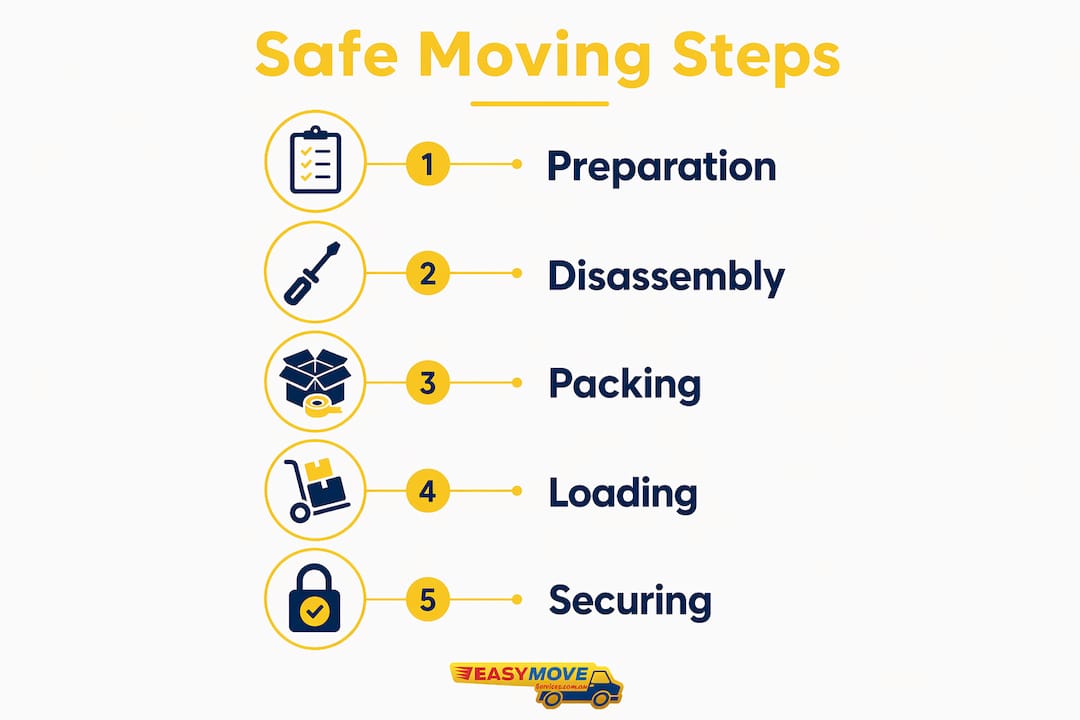
Pro Tip: Pack your hardware bags the night before moving day, not on the morning. Rushing this step is how bolts get lost.
What equipment and materials protect outdoor furniture in transit?
The right materials make the difference between furniture that arrives intact and furniture that arrives scratched, dented, or warped. Moving blankets, heavy-duty stretch wrap, dollies, and anchor straps are the core kit for any outdoor furniture move. Each item serves a specific purpose, and skipping one creates a gap in your protection.
Here is what you need and why each item matters:
- Moving blankets and furniture pads. These wrap around frames and tabletops to absorb impact and prevent surface scratches. Use multiple layers on timber and wicker, which are the most scratch-prone materials.
- Heavy-duty stretch wrap. This holds your blankets in place without touching the furniture surface directly. Avoid adhesive tape on wood, wicker, or painted surfaces because it leaves residue and can lift paint or finish when removed.
- Dollies and hand trucks. Use these for heavy stone tabletops, cast iron frames, and large timber benches. Lifting these items by hand increases injury risk and makes it harder to control placement in the truck.
- Anchor straps. Loop these through truck wall rails and over furniture pieces to hold everything firm. Straps prevent the lateral shifting that causes the most damage during sudden stops and sharp turns.
- Edge guards and foam padding. Fit these over sharp corners and glass surfaces before wrapping. Glass tabletops need a full layer of foam, then blankets, then stretch wrap.
- Breathable fabric bags for cushions. These allow airflow and prevent the moisture buildup that leads to mould. Never use sealed plastic bags for cushions unless they are bone dry.
Pro Tip: Hire or borrow a four-wheel furniture dolly for anything over 30 kilograms. A two-wheel hand truck tips heavy pieces forward and puts strain on the handler.
The table below shows which materials suit which furniture types:
| Furniture type | Recommended protection |
|---|---|
| Timber tables and chairs | Moving blankets, stretch wrap, edge guards |
| Wicker and rattan | Soft furniture pads, stretch wrap only (no tape) |
| Painted metal frames | Moving blankets, foam corner guards |
| Glass tabletops | Full foam wrap, moving blankets, vertical loading |
| Outdoor cushions | Breathable fabric bags, moisture-absorbing packets |
How should you load and secure outdoor furniture in the truck?
Loading strategy affects damage prevention more than packing alone. A well-packed piece of furniture can still crack or warp if it shifts during transit. Balanced, secured loads prevent shifting and reduce the stress on every item in the truck.
Follow this sequence for the best result:
- Load heavy items first, against the truck walls. Cast iron frames, stone tops, and large timber pieces go in first. Placing them against the walls creates a stable base and lowers the centre of gravity.
- Stand flat pieces vertically. Glass tabletops and flat timber panels load vertically with padding between each piece. Horizontal stacking puts weight on the surface and causes warping or cracking over long distances.
- Fill every gap. Empty space is where damage happens. Use rolled moving blankets, cushions, or foam wedges to fill gaps between pieces. This limits the movement caused by road vibration, sudden stops, and turns.
- Strap everything to the truck walls. Run anchor straps from wall rails over and around furniture groups. Check tension before you close the truck. Straps should be firm but not so tight that they compress padding into the furniture surface.
- Place smaller and fragile items centrally, elevated off the floor. Smaller pieces placed in the middle of the load are protected on all sides by larger items. Elevating them on blankets keeps them away from floor vibration.
- Plan your load before you start. Walk through the truck and decide where each piece goes before you carry anything in. Rearranging heavy furniture inside a truck is exhausting and increases the risk of dropping or scraping pieces.
Pro Tip: Drive the loaded truck around the block before heading to your destination. Listen for any rattling or movement, then adjust straps and wedges before the full journey.
Weight distribution and load planning follow the same principles whether you are moving a single outdoor setting or an entire garden’s worth of furniture.
What special care do cushions and delicate materials need?
Cushions are the most commonly damaged outdoor furniture items during a move, and the cause is almost always moisture. Cushions packed while damp trap moisture inside sealed packaging, which creates mould and mildew within days. The fix is simple but requires planning ahead.
Clean cushions thoroughly two to three days before moving day. Use an upholstery cleaner suited to the fabric, then leave them flat in a dry, ventilated area until completely dry. Press your hand firmly into the centre of each cushion before packing. If it feels cool or damp at all, give it more drying time.
Pack dry cushions in breathable fabric bags rather than sealed plastic. If you must use a plastic container, place moisture-absorbing packets inside and leave the lid slightly ajar during short-distance moves. Decorative outdoor pillows with embroidery or structured shapes benefit from being packed individually to maintain their form.
Wicker and rattan deserve extra attention because transit vibration combined with their brittle structure causes cracking. Wrap each wicker piece in soft furniture pads rather than stiff cardboard, which can press into the weave and snap individual strands. For painted metal, check for any existing chips or rust spots before wrapping. Exposed metal can transfer rust stains to padding and then back onto adjacent furniture surfaces.
Pro Tip: Place a sheet of baking paper between stacked cushions before bagging them. It prevents fabric surfaces from sticking together in humid conditions.
Key takeaways
Safe outdoor furniture relocation requires preparation days in advance, material-specific packing, and a structured load sequence to prevent moisture damage, surface scratches, and shifting during transit.
| Point | Details |
|---|---|
| Start preparation early | Clean and disassemble furniture several days ahead to allow full drying and avoid rushed handling. |
| Match materials to packing method | Use moving blankets for timber and wicker, foam wraps for glass, and breathable bags for cushions. |
| Never tape sensitive surfaces | Apply stretch wrap over blankets so adhesive never contacts wood, wicker, or painted finishes. |
| Load heavy pieces first | Place heavy items against truck walls to stabilise the load and lower the centre of gravity. |
| Label all hardware bags | Attach labelled resealable bags to the furniture piece they belong to, preventing loss and reassembly confusion. |
What I have learned from moving outdoor furniture the hard way
Most people assume outdoor furniture is tough because it lives outside. That assumption is the most common reason pieces arrive damaged. Outdoor finishes are designed to resist weather, not the concentrated friction and vibration of a moving truck.
The piece of advice I give most often is this: treat your outdoor setting the way you would treat a dining table. Wrap it with the same care, load it with the same caution, and give it the same drying time before packing. The materials are different, but the vulnerability is the same.
I have seen families skip the labelling step on hardware bags and spend two hours at the destination trying to match bolts to frames by trial and error. A five-minute labelling job before the move saves that entirely. Tape the bag to the underside of the piece it belongs to, and you will not lose a single bolt.
For bulky or very heavy pieces, such as large stone-top outdoor tables or cast iron settings, professional moving services are the safer choice. The equipment professionals carry, including furniture dollies, protective covers, and anchor systems, reduces damage risk significantly compared to a DIY approach. There is no shame in recognising when a job is beyond what a hire truck and a few friends can handle safely.
The equipment most people overlook is the four-wheel furniture dolly. A standard two-wheel hand truck is fine for boxes, but it tips heavy outdoor pieces forward and puts the handler in a difficult position. A flat, four-wheel dolly keeps the weight centred and gives you full control.
— EasyMovers
Moving outdoor furniture with EasyMove Services
Relocating outdoor furniture takes more than a hire truck and a few strong arms. EasyMove Services provides trained crews and professional packing services that cover everything from disassembly and wrapping through to load placement and real-time tracking during transit.

Whether you are moving a full outdoor setting across town or transporting a fragile wicker collection interstate, EasyMove Services brings the right equipment and the right approach. The team works with individuals, families, and NDIS participants to make sure every item arrives in the condition it left. For tailored advice on your move, including choosing the right interstate removalist, reach out to EasyMove Services directly. No dramas, just a well-planned move.
FAQ
How far in advance should I prepare outdoor furniture for a move?
Start cleaning and disassembling outdoor furniture at least two to three days before moving day. This allows full drying time and prevents rushed handling errors on the day.
Can I use regular packing tape on outdoor furniture?
Avoid applying adhesive tape directly to wood, wicker, or painted surfaces. Use heavy-duty stretch wrap over moving blankets instead, so the tape contacts plastic wrap rather than the furniture finish.
How do I stop outdoor cushions going mouldy during a move?
Clean cushions thoroughly and allow them to dry completely before packing. Pack them in breathable fabric bags rather than sealed plastic, and add moisture-absorbing packets if using any enclosed container.
When should I hire professional movers for outdoor furniture?
Hire professional movers for heavy pieces such as stone-top tables, cast iron settings, or large wicker suites. Professional crews carry specialised equipment including furniture dollies and anchor systems that reduce damage risk for bulky or fragile items.
How do I load a glass tabletop safely in a moving truck?
Wrap glass tabletops in a full layer of foam padding, then cover with moving blankets secured by stretch wrap. Load them vertically rather than flat, with padding between each panel, to prevent cracking under stacked weight.
Recommended
- How Heavy Furniture Gets Moved Safely: A Practical Guide
- Why Nursery Furniture Needs Careful Moving: 2026 Guide
- Common Mistakes When Moving Furniture: 2026 Guide
- How To Protect Furniture During A House Move