

Moving your family across state borders is defined as an interstate relocation requiring coordinated logistics, legal compliance, and deliberate family communication across every stage. Unlike a local move, this type of relocation involves carrier licensing, multi-week delivery windows, school transfers, and professional re-credentialling. Organisations like Moving Hub, Relo.AI, and the FMCSA each document how cost, distance, and family dynamics compound the complexity. You can manage a family move across state borders successfully by treating it as an operational project with clear phases, assigned roles, and a realistic budget from day one.
What does managing a family move across state borders involve?
An interstate family relocation covers far more than loading a truck. You are coordinating carrier selection, packing systems, school enrolments, utility transfers, and the emotional wellbeing of every family member simultaneously. The interstate moving checklist you build in the first weeks sets the pace for everything that follows. Skipping early planning creates compounding problems: wrong carriers, missed deadlines, and stressed children.
The core components are logistics, cost control, family communication, and post-move compliance. Each one affects the others. A poorly chosen carrier inflates costs. Inconsistent communication unsettles children. Missed registration deadlines attract fines. Treating these four areas as connected, not separate, is the defining difference between a smooth relocation and a chaotic one.

What logistics and preparations are essential for a smooth interstate move?
Planning your interstate move on a structured timeline is the single most effective way to reduce move-day chaos. An 8-week or 30-60-90 day model works well for most families. Start eight weeks out with carrier research and finish the final week with an essentials bag packed and ready.
Here is a practical sequence to follow:
- Verify carrier credentials. Check every mover’s USDOT number at FMCSA.gov before signing anything. Licensed direct carriers with binding quotes are more reliable than brokers, who often resell jobs and cause pricing and scheduling problems.
- Get a binding estimate in writing. A non-binding quote can increase significantly on move day. A binding estimate locks the price to the agreed inventory.
- Build a packing plan with a unified labelling system. Colour-coding by room and numbering each box prevents unpacking confusion. BoxBuddy’s coordination guides recommend a 15-minute family alignment session before packing begins to get everyone using the same system.
- Photograph all furniture and high-value items before loading. Photographic documentation is your legal leverage if a moving company damages goods. Insurers require proof of prior condition for claims.
- Pack a two-week essentials bag. Interstate moves operate on delivery windows of 1–14 business days, not fixed arrival dates. Medications, school uniforms, chargers, and basic kitchenware belong in this bag, not on the truck.
- Schedule vehicle registration and licence updates. Most states require these within 30–60 days of arrival. Add the deadline to your calendar before you leave.
Pro Tip: Book your carrier at least six weeks before your move date. Peak season slots fill fast, and last-minute bookings often mean higher prices and less reliable operators.
How can families manage moving costs effectively when relocating across states?
Interstate moving costs range from $1,200 for a small household to over $14,000 for large families, with distance and shipment weight as the primary drivers. That range is wide enough to make budgeting feel impossible, but three levers give you real control.
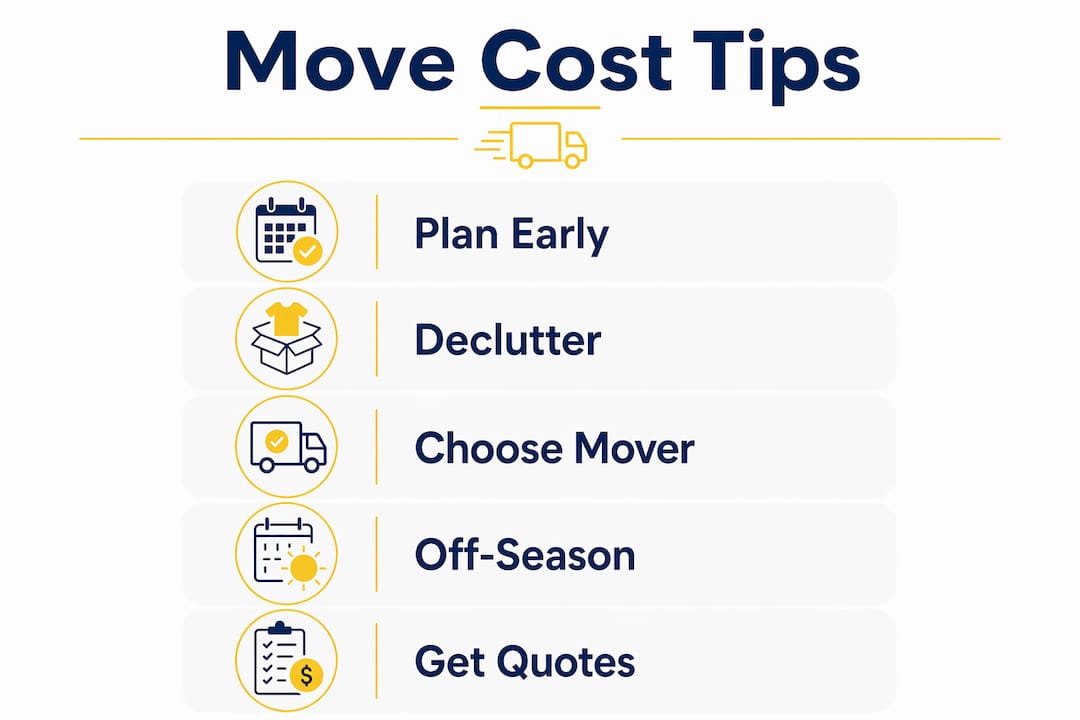
Declutter before you book. Removing excess weight saves $75–$150 per 500 lbs of goods cut from your shipment. For a large family home, that adds up quickly. Sell, donate, or dispose of anything you would not pay to move twice.
Time your move in the off-season. Moving between october and march delivers savings of 15–25% compared to peak summer months. School calendars make this difficult for families, but even shifting your move date by two or three weeks can drop the price noticeably. You can find more money-saving strategies specific to Australian interstate moves worth reviewing before you finalise your budget.
Choose the right type of mover. The table below shows how carrier types compare on cost and reliability.
| Mover Type | Pricing Structure | Key Risk |
|---|---|---|
| Licensed direct carrier | Binding or non-binding estimate | Higher upfront cost, lower risk |
| Broker | Quoted price, resold to carrier | Price changes, scheduling issues |
| Shared load service | Per-cubic-metre rate | Longer delivery window |
| DIY truck hire | Daily rate plus fuel | Full physical and logistical burden |
Avoid any operator who cannot provide a USDOT number or who asks for a large cash deposit upfront. These are common moving scams that cost Australian families thousands each year.
Pro Tip: Get at least three binding quotes from licensed direct carriers before committing. The spread between quotes often reveals which operators are padding their margins.
What strategies help manage family dynamics and children’s wellbeing during a move?
Children cope better with interstate moves when familiar routines and clear expectations are maintained throughout the transition. Parental emotional steadiness directly influences children’s stress levels. If you appear calm and organised, your children read the move as manageable rather than threatening.
Practical steps that make a real difference include:
- Communicate early and age-appropriately. Tell younger children about the move two to four weeks out. Older children and teenagers benefit from earlier notice and more involvement in decisions like bedroom setup or school selection.
- Create a shared family calendar. Predictability reduces anxiety. When children can see the timeline, they feel less like passengers and more like participants.
- Plan travel days with intention. Long drives or flights with children require scheduled breaks, familiar snacks, and quiet activities. A stress-free travel day does not happen by accident. It requires the same planning discipline as the logistics side of the move.
- Use farewell rituals. A small gathering with close friends, a final visit to a favourite park, or a photo book of the old home gives children a sense of closure. This is not sentimental padding. Child development research consistently shows that rituals reduce grief responses during transitions.
- Model the behaviour you want to see. Children mirror parental affect. If you treat the move as an adventure with manageable challenges, most children will follow your lead.
Pro Tip: Give each child a small “moving day kit” with their favourite snacks, a comfort item, and a simple activity. It keeps them occupied and signals that their needs matter in the process.
How do you coordinate shared responsibilities during a family move?
Role clarity is the difference between a coordinated family move and a stressful free-for-all. Inconsistent labelling between family members causes unpacking delays that stretch for days. A unified system with colour coding and standard naming, agreed before a single box is packed, prevents this entirely.
Assign specific roles before move day, not on the morning of. Suggested roles include a logistics lead who manages the carrier and delivery schedule, a packing coordinator who owns the labelling system, a children’s guardian who keeps kids safe and occupied on move day, and a door manager who checks items on and off the truck against a numbered inventory list.
Weekly family moving meetings keep everyone aligned. A simple agenda covers which rooms are packed, what is still outstanding, any blockers, and the next week’s priorities. These meetings take fifteen minutes and prevent the kind of last-minute scramble that causes damage and forgotten items.
Children aged 8 and over can take on age-appropriate packing tasks, such as packing their own bedroom boxes under supervision. This builds their sense of ownership over the move and reduces the total workload on adults. Shared digital tools like Google Keep, Trello, or a simple shared notes app give every family member visibility over the moving checklist without requiring constant verbal updates.
Pro Tip: Number every box and keep a master list on your phone. If a box goes missing or arrives damaged, you know exactly what was in it without opening everything.
What are the essential post-move steps after crossing state lines?
Arriving at your new home is not the finish line. A structured post-move checklist prevents the legal and administrative issues that catch families off guard weeks after arrival.
Key steps to complete within the first 30–60 days include:
- Update your driver’s licence and vehicle registration. Licence and registration updates are required within 30–60 days in most states. Some states require a vehicle inspection before registration is accepted. Check your new state’s transport authority website on arrival day.
- Enrol children in new schools. Contact the school before your move date. Most public schools require proof of address, immunisation records, and previous school reports. Early contact avoids enrolment delays.
- Transfer utilities and update your address. Banks, Medicare, the ATO, and your superannuation fund all need your new address. A missed update can delay tax returns, Medicare rebates, and important correspondence.
- Inspect your delivery and document any damage. Check every item against your numbered inventory before signing the delivery receipt. File any damage claim with the carrier within the timeframe specified in your contract.
- Check professional licence requirements. Professional licences such as teaching or medical registrations do not automatically transfer across state lines. Contact the relevant registration board in your new state before your move date to understand re-credentialling timelines.
- Register to vote and find local healthcare providers. Both are easy to overlook and both matter for your family’s long-term settlement in the new location.
Key takeaways
Successfully managing a family move across state borders requires early planning, verified carriers, a unified packing system, and deliberate support for children throughout the process.
| Point | Details |
|---|---|
| Verify your carrier | Check USDOT credentials at FMCSA.gov before signing any contract. |
| Control costs early | Declutter before booking to save $75–$150 per 500 lbs removed from your shipment. |
| Pack a two-week essentials bag | Delivery windows span up to 14 business days, so keep critical items off the truck. |
| Support children with routine | Familiar routines and parental calm directly reduce children’s stress during the transition. |
| Complete post-move compliance | Update licences, registrations, and professional credentials within 30–60 days of arrival. |
What i have learned after watching families move interstate
After years of working alongside families through interstate relocations, the pattern I see most often is this: families over-invest in researching moving companies and under-invest in preparing their children and themselves for the emotional weight of the move.
The logistics are solvable. You can find a licensed carrier, get a binding quote, and build a packing system in a weekend. What takes longer, and what most guides skip over, is the reality that a cross-state relocation disrupts every anchor point a family has built. Schools, friendships, routines, local knowledge, and community connections all reset at once. That is a significant psychological load, even for resilient families.
The families who come through it well share one trait: they treat the move as a team project with a shared goal, not a logistical burden that falls on one person. The parent who carries the entire mental load of the move, while also managing children’s emotions and keeping the household running, burns out before the truck arrives. Distributing responsibility, even imperfectly, produces better outcomes for everyone.
My honest advice is to start the family conversation earlier than feels necessary, assign roles before anyone feels overwhelmed, and give yourself permission to ask for professional help with the physical work. The money you spend on a reliable removalist is almost always recovered in reduced stress, fewer damaged items, and a faster settlement into your new home. No dramas.
— John
How Easymoveservices can support your interstate family move
Relocating your family interstate is a big undertaking, and having the right support from day one makes a genuine difference. Easymoveservices combines real-time tracking technology with personalised packing and removalist services, so you always know where your belongings are and can focus on your family instead of the logistics.

Whether you need help with moving high-value items safely across state lines, or you want a fully managed packing service that uses sustainable packing materials to protect your goods and reduce waste, Easymoveservices has you covered. The team also supports NDIS participants with tailored moving solutions. Get in touch with Easymoveservices to discuss your family’s interstate move and get a personalised quote that fits your timeline and budget.
FAQ
What does a cross-state family move typically involve?
A cross-state family move involves carrier selection, interstate packing and transport, school transfers, utility changes, and post-move legal compliance including licence and registration updates. Planning across an 8-week or 30-60-90 day timeline keeps each phase manageable.
How much does it cost to move a family interstate?
Interstate moving costs range from $1,200 for a small household to over $14,000 for large families, depending on distance and shipment weight. Decluttering before booking and moving in the off-season (october to march) are the two most effective ways to reduce that figure.
How do i choose a reliable interstate removalist?
Verify the carrier’s USDOT number at FMCSA.gov and request a binding estimate before signing any contract. Licensed direct carriers are more reliable than brokers, who often resell jobs and cause pricing and scheduling problems.
How do i help my children cope with an interstate move?
Maintain familiar daily routines and communicate the move timeline clearly and age-appropriately. Research consistently shows that parental calm and predictable routines are the strongest factors in reducing children’s stress during a relocation.
What do i need to do legally after moving to a new state?
Update your driver’s licence and vehicle registration within 30–60 days of arrival, enrol children in their new school, and check whether any professional licences require re-credentialling in your new state. Missing these deadlines can result in fines or career disruptions.
Recommended
- How To Choose The Right Interstate Removalist For Long Move
- What Are The Best Tips For Moving Interstate With Ease | EasyMove Services
- How To Organise Interstate Move Timeline | EasyMove Services
- Stress-Free Move With Kids & Pets: Tips For Families