

Moving large appliances safely is defined as the process of preparing, securing, and physically transporting heavy household appliances without causing injury or property damage. A fridge, washing machine, or dryer can weigh anywhere from 60 to over 130 kilograms, and most damage during a move comes from skipping preparation steps, not from the weight alone. Treat your appliance move as an operational project, not just a transport task. With the right prep, equipment, and technique, you protect both your appliances and your home.
What essential preparation steps should you do before moving large appliances?
Preparation is the single most important phase when you want to move large appliances safely. Rushing this step causes the majority of transit damage, and it costs nothing to get right.
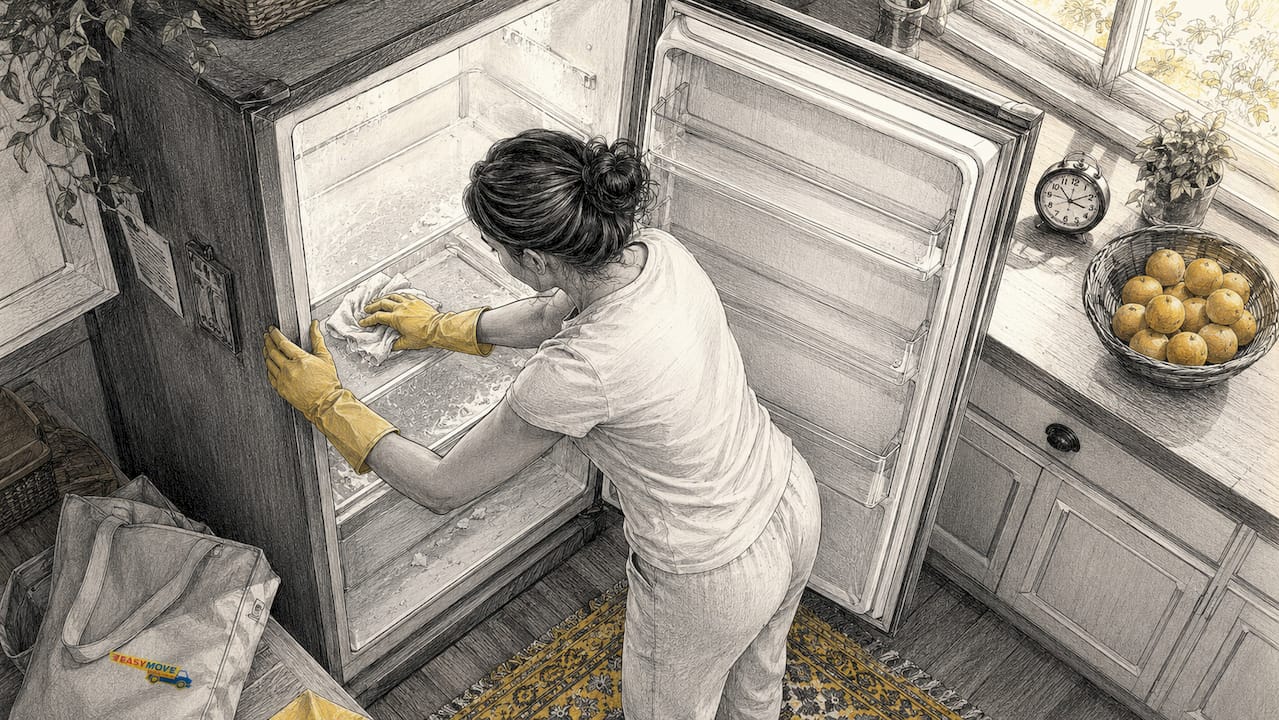
Refrigerators and freezers require defrosting 24–48 hours before transport. Any residual moisture inside the unit can cause water ingress and internal damage during the move. Once defrosted, dry the interior thoroughly and leave the doors slightly ajar to prevent mould.
Washing machines carry a specific risk that most homeowners overlook. The drum sits on a suspension system designed for in-place use, not transport. Reinstall transit bolts to immobilise the drum before the machine leaves the house. Without them, the drum swings freely and can crack the tub or damage the bearings in a single trip.
For all appliances, empty every compartment and remove any loose shelves, trays, or racks. Tape or wrap doors shut with stretch wrap or packing tape to stop them swinging open mid-move. Label all cords and hoses, then coil and secure them to the appliance body with cable ties or tape so they cannot snag on doorframes or stairs.
Pro Tip: Gas appliances must be disconnected by a licensed gas fitter before you move them. Do not attempt this yourself. Arrange the disconnection at least a day before moving day to avoid delays.
For a broader checklist covering the whole home, the home preparation tips from EasyMove Services are worth working through before moving day.
What tools and equipment do you need to safely transport heavy appliances?
The right equipment does more work than brute strength. Using undersized or incorrect gear is the leading cause of both injury and appliance damage during a DIY move.
| Equipment | Purpose | Key specification |
|---|---|---|
| Appliance dolly | Transport upright loads over distances | Stair-climbing wheels, securing strap included |
| Ratchet tie-down straps | Secure load to dolly or vehicle | Minimum two straps, each rated above appliance weight |
| Furniture sliders | Protect floors during short repositioning | Non-scratch base, sized to appliance feet |
| Moving straps | Shift load weight to legs and hips | Adjustable for two-person lifts |
| Corner guards | Protect walls and appliance edges | Foam or cardboard, reusable |
Equipment load ratings must sit at least 25% above the appliance weight to handle dynamic forces during acceleration and stair climbing. A dolly rated for exactly the appliance weight will fail under real-world conditions.
Ratchet tie-down straps are the correct choice for securing appliances. Cam buckle straps are not sufficient for loads of this size. Use a minimum of two straps per appliance, placed across the widest dimension of the load. Before moving, apply a firm shake test to confirm the load does not shift.
Moving straps are worth renting even for a single move. They redistribute the load from your lower back to your legs and hips, which is where the body handles weight most safely. Non-slip, oil-resistant footwear is non-negotiable for every person helping on the day.
Pro Tip: Rent rather than buy a powered stair-climbing hand truck if your move involves stairs. A powered stair climber mechanically drives the load up each step, eliminating tipping risk and requiring only one operator.
How do you physically move large appliances through doorways, hallways, and stairs?
Physical execution is where preparation either pays off or falls apart. Follow a clear sequence and communicate constantly with your team.
Before you lift anything, measure every doorway, hallway, and stairwell on the route. Compare those measurements against the appliance dimensions. A fridge that is 90 centimetres wide will not pass through an 88 centimetre doorframe without removing the doors. Plan the exact route and identify every tight point before the appliance leaves its position.
The physical steps for a safe move are:
- Position the dolly next to the appliance and tilt the appliance slightly to slide the dolly plate underneath. Never drag an appliance across the floor without sliders or a dolly.
- Secure the appliance to the dolly with two ratchet straps before moving. Apply the shake test.
- Lay down cardboard and corner guards along the route to protect floors and walls before you start moving.
- For doorways, use the tilt and slide method. Angle the appliance slightly, clear the frame on one side, then straighten through. Move slowly and communicate with your partner at every step.
- On stairs, move one step at a time. The person at the lower end controls the pace. Never rush a stair move.
- For loads over 600 lbs or any stair move, a minimum of two operators is required. One person cannot safely control a heavy appliance on stairs.
“The tipping moment on a staircase creates rotational force that is extremely difficult to control manually for loads over 500 lbs. Two operators with near-perfect technique on every single step are the minimum safe standard for a manual stair move.”
Lifting technique matters as much as equipment. Twisting the torso under load is the most common cause of back injury during appliance moves. Keep the load close to your body and move your feet to change direction. Never pivot at the waist while holding weight.
For complex stair moves, spotter radios or earpieces improve coordination significantly compared to hand signals. When one person cannot see the other clearly, verbal communication through a device removes guesswork and reduces the risk of a dropped load.
Pro Tip: Pay attention to noise during the move. Load shifting inside the appliance or against the dolly is an early warning of instability. Using moving blankets around the appliance reduces noise and protects both the unit and your walls.
For detailed guidance on moving heavy items of all kinds, EasyMove Services has a practical resource worth reading alongside this guide.
What post-move checks should you do to protect your appliances?
The move is not finished when the appliance reaches its new position. A short post-move inspection protects both your appliances and your insurance position.
- Inspect the appliance exterior for dents, scratches, or cracks that were not present before the move. Check walls and floors along the route for any damage caused during transit.
- Let a refrigerator or freezer stand upright for several hours before plugging it in, particularly if it was tilted during transport. This allows the compressor oil to settle back into the correct position.
- Remove washing machine transit bolts before the first use. Leaving them in will cause violent vibration and can permanently damage the machine.
- Test each appliance according to the manufacturer’s guidelines before declaring the move complete.
- Take date-stamped photos of each appliance in its new position. This creates a clear record for insurance purposes if a fault appears later.
Transport insurance rarely aligns with manufacturer warranties. Most manufacturer warranties do not cover transit damage at all. Read your insurance policy carefully to understand what is covered, what is excluded, and who bears responsibility for pre-existing versus transit damage.
Pro Tip: Document the condition of each appliance with photos before and after the move. A timestamped photo taken before disconnection is your strongest evidence if a damage dispute arises.
Key takeaways
Moving large appliances safely requires correct preparation, rated equipment, two-person technique on stairs, and a post-move inspection to catch any transit damage before it becomes a costly problem.
| Point | Details |
|---|---|
| Prepare appliances before moving | Defrost fridges 24–48 hours ahead and reinstall washing machine transit bolts before transport. |
| Use rated equipment | All dollies and straps must be rated at least 25% above the appliance weight to handle real-world loads. |
| Two people for stairs | Any stair move or load over 600 lbs requires a minimum of two operators to prevent injury and tipping. |
| Protect the route first | Lay cardboard and corner guards along the full route before moving any appliance. |
| Check and document after the move | Photograph appliances post-move and read your transport insurance policy to understand your coverage. |
What I have learned from moving large appliances the hard way
The most common mistake I see is treating preparation as optional. Homeowners skip the transit bolts on the washing machine because they think it is a short trip. They skip defrosting the fridge because they are running late. Then they wonder why the drum cracked or why there is water pooling under the new kitchen floor. Patience in the prep phase saves real money.
Brute strength is not a substitute for the right equipment. A team of four people without a dolly or moving straps will cause more damage and more injuries than two people with proper gear. Rental equipment, particularly a powered stair climber, costs a fraction of what a single appliance repair or back injury costs.
Clear roles matter more than most people expect. Before anyone touches an appliance, decide who calls the pace, who spots, and who controls the dolly. Confusion mid-stair is when things go wrong. A professional moving team operates with defined roles from the first lift to the last. That discipline is something any homeowner can replicate with a bit of planning.
Finally, read your insurance policy before moving day, not after. Knowing what your coverage includes changes how you document the move and how you handle any damage that appears later.
— EasyMovers
EasyMove Services: professional appliance moving with real peace of mind
Moving large appliances is one of the most physically demanding parts of any relocation. When the risk of injury or damage is too high to take on yourself, EasyMove Services provides trained teams, the right equipment, and real-time tracking so you know exactly where your goods are throughout the move.

EasyMove Services handles heavy appliance moves for homeowners, renters, and NDIS participants across Australia. The team brings rated dollies, securing straps, and floor protection as standard. For those who prefer minimal contact, the contactless moving option delivers the same professional standard with added flexibility. If you want the job done safely without the stress, EasyMove Services is the straightforward choice.
FAQ
How far in advance should I defrost my fridge before moving?
Defrost and dry your refrigerator or freezer 24–48 hours before transport to prevent water damage and mould during the move.
Do I need transit bolts every time I move a washing machine?
Yes. Transit bolts must be reinstalled before every move to immobilise the drum and prevent suspension damage during transport.
How many people do I need to move a large appliance up stairs?
A minimum of two operators is required for any stair move or for loads over 600 lbs, regardless of how short the staircase is.
What type of straps should I use to secure a large appliance?
Use ratchet tie-down straps only, with at least two straps per appliance, each rated above the appliance weight. Cam buckle straps are not sufficient for heavy loads.
Does my manufacturer warranty cover damage that happens during a move?
Manufacturer warranties rarely cover transit damage. Review your transport insurance policy carefully before moving day to understand what is and is not covered.
Recommended
- How Heavy Furniture Gets Moved Safely: A Practical Guide
- Common Mistakes When Moving Furniture: 2026 Guide
- How To Move A Pool Table Safely | EasyMove Services
- How To Protect Furniture During A House Move