

Protecting furniture during a house move means preventing scratches, dents, moisture damage, and shifting impact through the right combination of padding, wrapping, and securing techniques. The core tools are moving blankets, plastic stretch film, bubble wrap, and door frame protectors. Get these right and your furniture arrives in the same condition it left. Skip them and even a short trip across town can leave your sofa scuffed, your timber dresser gouged, and your glass tabletop cracked.
What materials are best for furniture moving protection?
The right materials do most of the heavy lifting before the truck even moves. Moving blankets are the foundation of any solid furniture protection kit. The Econo Deluxe Moving Blanket, measuring 72" x 80" and weighing 5.5 lbs., uses cotton batting with non-woven polyester to absorb shock and prevent surface scratches during residential moves. Reusable and durable, quality blankets like these pay for themselves across multiple moves.
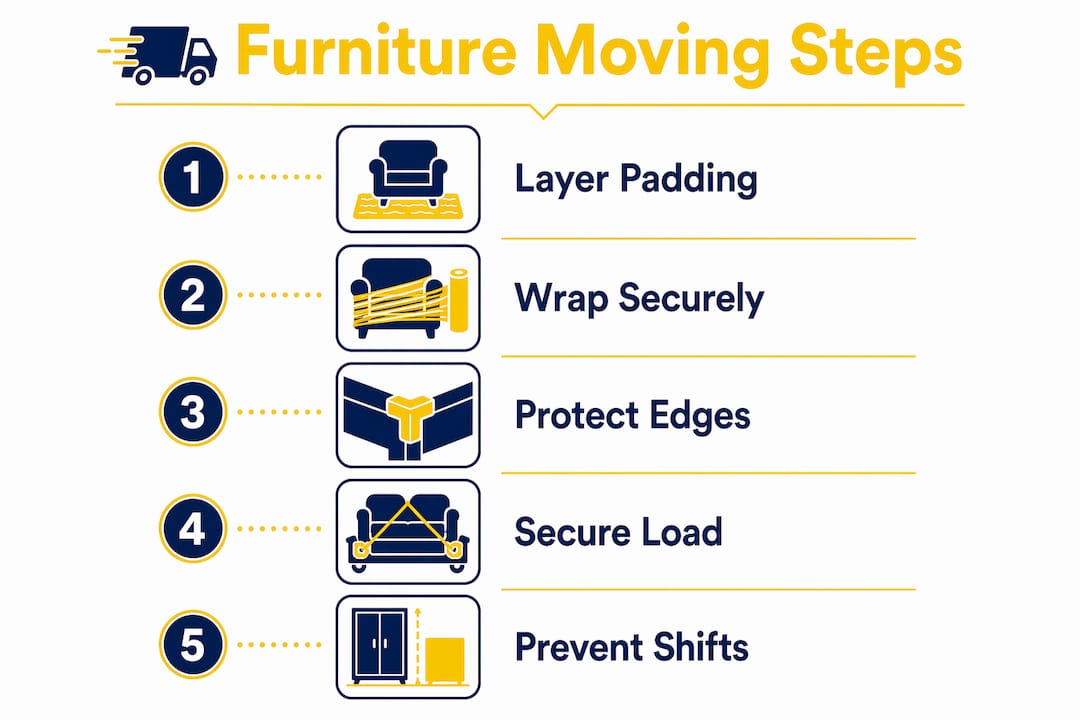
Plastic stretch wrap locks blankets in place and keeps drawers and doors from swinging open during transit. The critical rule: never apply stretch wrap directly onto timber or leather surfaces. Stretch film traps heat and moisture against the finish, which causes warping, staining, and cracking. Always layer a blanket or furniture pad underneath first.
Bubble wrap fills the gap for delicate components. Glass shelves, carved timber legs, and ceramic lamp bases all need bubble wrap before a blanket goes over them. Packing tape secures bubble wrap and cardboard corners. Painter’s tape works well on surfaces where standard tape might pull off paint or veneer.
| Material | Best use | Key advantage | Watch out for |
|---|---|---|---|
| Moving blankets | Sofas, wardrobes, tables | Absorbs shock, reusable | Needs stretch wrap to stay in place |
| Plastic stretch wrap | Securing blankets, sealing drawers | Holds everything tight | Never apply directly to wood or leather |
| Bubble wrap | Glass, carved timber, ceramics | Cushions fragile shapes | Adds bulk, use sparingly |
| Furniture pads | Flat surfaces, tabletops | Thin and easy to layer | Less protection than full blankets |
| Packing tape | Securing bubble wrap, cardboard | Strong hold | Can damage some finishes |
| Painter’s tape | Delicate surfaces, veneer | Paint-safe adhesion | Less holding strength |
Pro Tip: Buy moving blankets in a four-pack rather than individually. You will use every single one, and having spares means you can double-layer anything fragile without running short mid-move.
How to wrap furniture for moving: a step-by-step guide
Preparation is where most furniture damage is actually prevented. Rushing the wrapping stage is the single biggest mistake people make. Treat this part of the move like an operational project, not a quick job before the truck arrives.
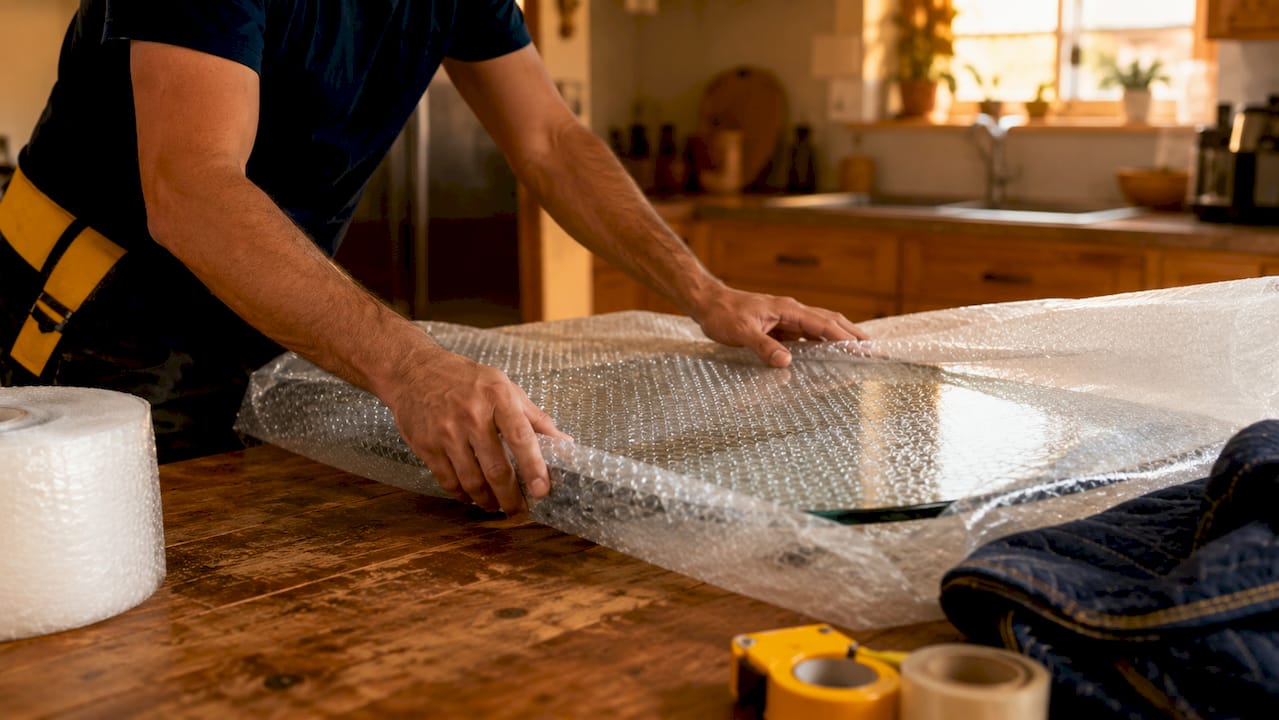
Start with disassembly. Remove drawers, legs, and shelves from each piece and wrap them separately with bubble wrap or furniture pads. Label every wrapped component clearly with masking tape and a marker so reassembly takes minutes, not an hour of guesswork. Tighten any loose screws on the main frame before wrapping.
Follow these steps for each major furniture piece:
- Remove all detachable parts and wrap them individually with bubble wrap or furniture pads.
- Label each wrapped part with the furniture name and its position (e.g., “bookshelf, left side panel”).
- Tighten all remaining screws and bolts on the main frame.
- Lay a moving blanket flat and place the furniture piece in the centre.
- Fold the blanket up and over all sides, covering every exposed surface.
- Wrap plastic stretch film over the blanket to hold it firmly in place.
- Add extra padding to corners and edges, which take the most impact during handling.
- Use furniture dollies or sliders to move heavy pieces to the truck without dragging them across floors.
Corners and edges deserve special attention. These are the contact points that hit door frames and other furniture first. Double-wrap them with an extra layer of bubble wrap or fold a spare blanket section over them before applying stretch film.
Pro Tip: Wrap glass tabletops and shelves in bubble wrap first, then sandwich them between two moving blankets. Stand them upright in the truck rather than laying them flat. Flat glass under load is far more likely to crack.
For more detail on preparing furniture for movers, Easymoveservices has a dedicated guide covering professional preparation techniques.
How do you protect your home during a furniture move?
The furniture is not the only thing at risk. Door frames, stair banisters, timber floors, and painted walls all take hits during a move if you do not protect the pathways first. A scuffed door frame or gouged skirting board is just as frustrating as a damaged sofa.
Door frame protectors with Velcro tabs, such as the Door Cover Protector from New Haven Moving Equipment, wrap around both sides of a door jamb and cushion impacts as furniture passes through. At $34.50 each, they cost far less than repainting a door frame. Fit them before you move a single piece of furniture.
Protect your floors with these steps:
- Lay drop cloths or flattened cardboard boxes along every high-traffic pathway from room to truck.
- Cover floors with drop cloths before moving heavy items to prevent scratches and scuff marks.
- Wrap stair banisters with moving blankets secured with packing tape, not adhesive tape that could pull off the finish.
- Place furniture sliders under heavy pieces before moving them across timber or tiled floors.
- Pad sharp corners on walls at the end of hallways where furniture tends to swing wide.
Pro Tip: Measure every doorway and hallway before moving day. If a piece of furniture is within 5 cm of the door width, tilt it diagonally and move it on a dolly. Forcing it straight through is how door frames and furniture corners get destroyed.
Tight stairwells are where most home damage happens. Padding the banister and fitting corner guards on the wall at the landing turn is the difference between a clean move and a repair bill.
Best ways to secure furniture in transit to prevent damage
Loading the truck correctly is just as important as wrapping. A perfectly padded sofa still gets damaged if it slides across the truck floor for 20 minutes on the freeway.
Place heavy items at the bottom of the truck and lighter items on top. This keeps the load stable and prevents heavy pieces from crushing softer furniture below. Wardrobes and fridges go against the cab wall. Sofas and mattresses stand upright along the sides.
Common mistakes to avoid when loading:
- Leaving gaps between items. Gaps allow furniture to shift and collide during braking. Fill them with boxes, rolled blankets, or cushions.
- Relying on stretch wrap alone to hold items in place. Stretch wrap is not a strap. Use ratchet straps or rope tied to the truck’s anchor points.
- Placing padding between items only on the outside. Every surface that touches another piece needs a blanket or pad between it.
- Using plastic wrap directly on timber in warm weather. Heat builds up inside a closed truck. Moisture trapped by stretch film damages wood and leather finishes within hours.
- Overloading one side of the truck. Uneven loads shift on corners and cause items to topple.
Ratchet straps are the most reliable way to tie down large furniture. Loop them through the truck’s anchor rings and over the furniture, then tighten until there is no movement. Check them again after the first kilometre of driving.
For tips on safely moving fragile items, Easymoveservices covers the specific handling techniques that protect delicate pieces during transit.
Key takeaways
Protecting furniture during a house move requires layered padding, correct wrapping technique, and firm securing inside the truck, applied in that order before the vehicle moves.
| Point | Details |
|---|---|
| Layer padding before wrapping | Always place a moving blanket under stretch film to prevent moisture damage to timber and leather. |
| Disassemble and label parts | Remove legs, drawers, and shelves, then wrap and label each piece to reduce damage and speed up reassembly. |
| Protect pathways first | Fit door frame protectors and lay drop cloths before moving any furniture through the home. |
| Secure loads with straps | Use ratchet straps tied to anchor points, not stretch wrap alone, to stop furniture shifting in transit. |
| Fill gaps in the truck | Pack spaces between items with boxes or rolled blankets to eliminate movement during braking and cornering. |
What I have learned from moves that went wrong
After seeing a lot of furniture moves, the pattern is clear. The damage almost never happens on the road. It happens in the first and last 10 metres, getting furniture out of the house and into the truck.
The most common loss is a timber tabletop corner that clips a door frame because someone skipped the door protectors. The second most common is a leather sofa that arrives with moisture marks because stretch film went straight onto the leather in a warm truck. Both are completely avoidable with 20 minutes of preparation.
Beginners tend to underestimate how many moving blankets they actually need. One blanket per piece sounds right until you realise a dining table has four legs, a top, and two ends, all of which need coverage. Buy more than you think you need. The unused ones store flat and cost nothing to keep.
The other thing I would tell anyone preparing for a move: invest in reusable quality blankets rather than cheap single-use foam. Quality blankets protect better, last across multiple moves, and can be hired back out or sold. The cheap foam tears, compresses, and ends up in landfill after one use.
Organisation and labelling matter more than most people expect. A wrapped piece with no label becomes a guessing game at the other end. Write the room destination and the piece name on every wrapped component. It takes 30 seconds and saves 30 minutes of frustration.
— John
Move with confidence using Easymoveservices
Knowing the right techniques is one thing. Having a professional team execute them on the day is another level of peace of mind entirely.

Easymoveservices uses high-quality moving blankets, door frame protectors, and professional securing techniques on every job. The team handles disassembly, wrapping, loading, and reassembly so your furniture arrives without a scratch. Real-time tracking keeps you informed throughout the move, and contactless moving options are available for added flexibility. Whether you are moving a studio apartment or a full family home, Easymoveservices brings the materials, the method, and the care your furniture deserves. Get in touch today for a no-fuss quote.
FAQ
What is the best way to wrap furniture for moving?
Wrap furniture by placing a moving blanket over the entire surface first, then securing it with plastic stretch film. Never apply stretch film directly to timber or leather, as trapped moisture causes surface damage.
Do I need door frame protectors for a house move?
Door frame protectors prevent scratches and dents when moving furniture through tight doorways. Padded protectors with Velcro tabs, such as those from New Haven Moving Equipment, fit quickly and cost far less than repairing a damaged door jamb.
How do I stop furniture from shifting in the moving truck?
Place heavy items at the bottom of the truck, fill gaps with boxes or rolled blankets, and secure everything with ratchet straps tied to the truck’s anchor points. Stretch wrap alone does not hold furniture in place during transit.
Should I disassemble furniture before a move?
Disassembling removable parts such as legs, drawers, and shelves reduces damage risk and makes furniture easier to carry through doorways. Wrap each part separately and label it clearly for fast reassembly at the other end.
Can I use plastic wrap directly on a timber dresser?
Plastic stretch wrap applied directly to timber traps heat and moisture, which damages the finish. Always layer a moving blanket or furniture pad underneath before wrapping with stretch film.
Recommended
- How To Prepare Furniture For Movers | EasyMove Services
- How To Pack Fragile Items For Moving Safely
- Moving To A New Home | Simple Tips For A Smooth Move
- Moving Tips & Removalist Advice | EasyMove Services