

The interstate home moving process is a federally regulated, multi-phase operation that covers planning, preparation, pickup, transit, delivery, and post-move settlement. Moving across state lines is fundamentally different from a local move. Federal transport regulations govern how movers price their services, what documents they must provide, and how disputes are resolved. Key paperwork like the Bill of Lading, Order for Service, and inventory list are legally required before any truck leaves your driveway. Understanding each stage before you book gives you real protection and far fewer surprises on the road.
What are the key stages in the interstate home moving process?
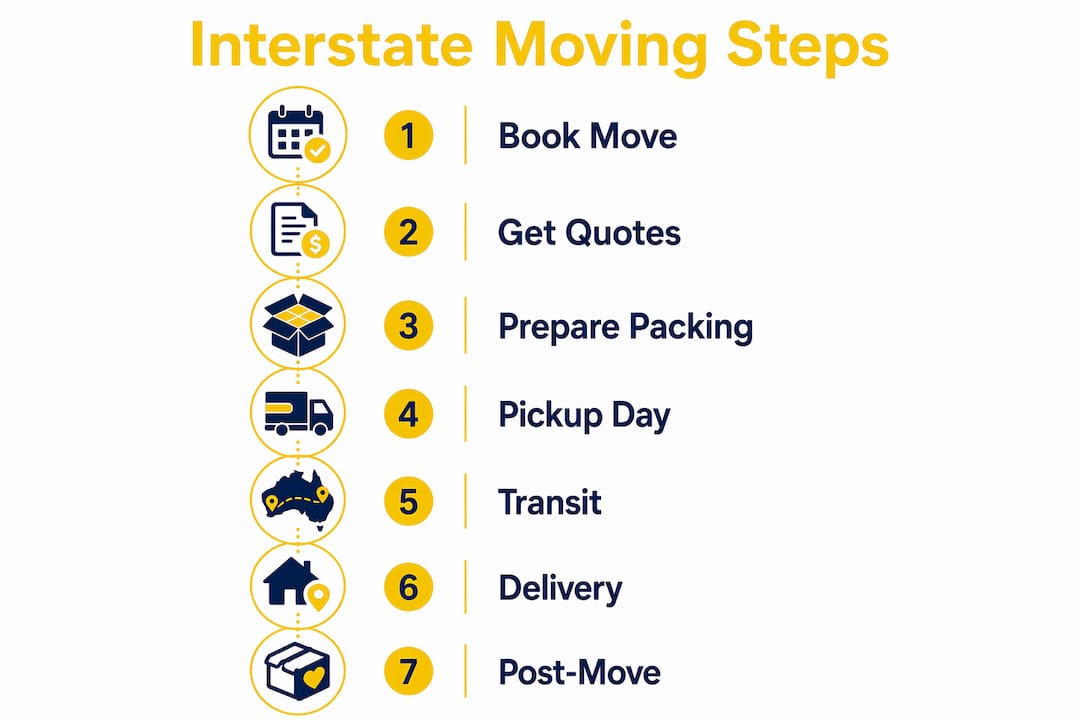
The interstate home moving process follows a clear sequence. Each stage builds on the one before it, so skipping steps early creates problems later.
1. Book your move 8–12 weeks out. Start planning early with an 8-week timeline, booking pickup and delivery windows rather than fixed dates. Licensed removalists fill their schedules fast, especially in peak season between october and february.
2. Gather quotes and confirm in writing. Contact at least three licensed carriers and request binding written estimates. A binding quote caps your cost; a non-binding one does not. This distinction matters enormously when your shipment weighs more than expected.
3. Pre-move preparation. Declutter, sort, and begin staged packing roughly four to six weeks before pickup. Non-essentials go first. Clothes, kitchenware, and daily items go last. Confirm your inventory list with your removalist before pickup day.

4. Pickup day. Be present when the crew arrives. Walk through the home with the team leader, confirm every item on the inventory, and photograph anything with existing wear or damage. You receive your Bill of Lading at this point. Do not let the truck leave without it.
5. Transit. Interstate delivery windows can span 1–14 business days. Plan your utilities, accommodation, and work schedule around a window, not a single date. This is the most common source of frustration for families who expect a precise delivery day.
6. Delivery day. Inspect every item before signing paperwork. Note any damage explicitly on the delivery documents. Signing without reading can forfeit your right to claim.
7. Post-move tasks. Update your address with Australia Post, re-register your vehicle in the new state, connect utilities, and enrol children in local schools. These tasks are easy to forget when you are surrounded by boxes.
Pro Tip: Pack an essentials bag for the first 48 hours at your new address. Include phone chargers, a change of clothes, medications, snacks, and basic toiletries. If your delivery is delayed or arrives late in the day, you will not be searching through 40 boxes to find your toothbrush.
How do you plan your interstate move timeline effectively?
Effective interstate move planning starts with a firm date and works backwards. Most families underestimate how much coordination is required when crossing state lines.
- 8–12 weeks out: Research licensed removalists, request binding quotes, and confirm your move date. Check that your chosen carrier holds a current Australian Business Number and has verifiable reviews on platforms like Google or ProductReview.com.au.
- 6–8 weeks out: Confirm your booking in writing, including the delivery window. Coordinate your move date with your employer, your children’s school enrolment deadlines, and your lease or settlement date at the new property.
- 4–6 weeks out: Begin staged packing with non-essential rooms first. Books, seasonal clothing, and decorative items can be packed well ahead of time. Label every box with its contents and the destination room.
- 2–4 weeks out: Arrange vehicle transport if you are not driving your car to the new state. Notify your bank, Medicare, the Australian Electoral Commission, and your private health insurer of your address change. Submit your Australia Post mail redirection at least two weeks before moving day, as mail forwarding takes 7–10 business days to activate reliably.
- 1 week out: Pack essentials last. Confirm access logistics with your removalist, including parking permits, lift bookings, and stair access at both addresses.
Pro Tip: Ask your removalist to confirm the delivery window in writing before pickup day. Verbal assurances about timing are not enforceable. A written confirmation protects you if the window shifts.
Timing flexibility is not optional on interstate moves. Delivery windows exist because trucks consolidate loads across multiple customers. Your furniture may share a truck with two other households heading in the same direction. Build at least three to five days of buffer into your accommodation and work arrangements.
What legal and documentation considerations should homeowners know?
Interstate moves are governed by federal transport regulations that protect you as a consumer. Four mandatory documents must be provided before loading: a written estimate, a Bill of Lading, an Order for Service, and an inventory list. Any removalist who refuses to provide these before the truck is loaded is operating outside the rules.
The 110% rule is one of the most misunderstood protections in interstate moving. On a non-binding estimate, your removalist cannot legally demand more than 110% of the original quoted price at delivery. That means if your quote was $5,000, the maximum you can be charged at the door is $5,500. Knowing this prevents a common tactic where customers are pressured to pay inflated amounts before their goods are unloaded.
Your rights matter on delivery day. Inspect every item before signing the delivery paperwork. Note damage explicitly in writing. Signing without reading the condition codes can forfeit your right to claim compensation, even if the damage is obvious.
You have up to 9 months after delivery to file a written loss or damage claim. That window sounds generous, but the strongest claims are supported by photos taken at pickup, condition codes noted on the inventory, and the original Bill of Lading. Keep all documents until the claim period has fully expired.
Verifying your removalist’s credentials before booking is non-negotiable. Confirm their Australian Business Number, check their public liability insurance, and ask for their dispute resolution process in writing. Reputable carriers provide a fixed, transparent contract and required information booklets before loading, which protects the consumer and clarifies expectations from the start.
How do you prepare your belongings and home for an interstate move?
Preparation is where most interstate moves are won or lost. A well-prepared home loads faster, arrives in better condition, and unpacks with far less stress.
- Separate ‘do not move’ items. Keep valuables, medicines, and important documents out of the shipment entirely. Passports, birth certificates, jewellery, and prescription medications travel with you personally. These items are difficult to replace and are often excluded from standard transit insurance.
- Photograph everything of value. Before packing, photograph furniture, electronics, and artwork from multiple angles. These images are your strongest evidence if a damage claim is needed. Store them in cloud storage so they are accessible from your new address.
- Label boxes with precision. Write the contents and the destination room on every box. “Kitchen, top shelf crockery” is more useful than “kitchen stuff.” Your removalist team can place boxes directly in the correct room, which saves hours of shifting on delivery day.
- Protect floors and entry points. On pickup day, lay down floor protection at doorways and along hallways. This prevents scuff marks and damage to timber or tiled floors, which can become a dispute between you and your landlord or buyer.
- Confirm access logistics in advance. Access details like stairs, parking, and lift availability directly affect loading speed and item safety. A narrow staircase that was not disclosed can slow the crew significantly and increase the risk of furniture damage. Confirm these details with your removalist at least one week before pickup.
A staging strategy for packing and keeping an essentials bag for the first 48 hours reduces stress after delivery. If a damage claim needs attention, you will be in a far better position to manage it calmly when your daily essentials are already unpacked and accessible.
What costs and budgeting factors influence an interstate move?
Interstate moving costs vary more than most families expect. Costs range from around $1,200 for a studio to over $14,000 for a large household, depending on distance, total weight, season, and the pricing method used. That range reflects real differences in what you are moving and how far it needs to travel.
| Cost Factor | What to Expect |
|---|---|
| Distance | Longer routes cost more; Sydney to Perth is significantly higher than Sydney to Melbourne. |
| Household size | A two-bedroom unit costs far less than a four-bedroom house with a full garage. |
| Pricing method | Binding quotes cap your cost; non-binding quotes can increase by up to 10% at delivery. |
| Season | Peak season (october to february) commands higher rates; moving in winter can reduce costs. |
| Hidden costs | Vehicle transport, temporary accommodation, and utility reconnection fees add up quickly. |
Getting three binding quotes from licensed carriers before committing is the single most effective way to control your budget. Binding quotes give you a fixed price regardless of the final weight, which removes the risk of a surprise bill on delivery day.
Decluttering before your move has a direct financial benefit. Removalists charge by weight and volume, so every item you sell, donate, or discard reduces your final cost. For tips on saving money through decluttering and off-peak timing, it pays to plan this step at least six weeks out. Moving in the cooler months, particularly between april and august, typically attracts lower rates and better availability from quality carriers.
Key takeaways
A successful interstate move depends on early planning, written documentation, and a clear understanding of your legal rights at every stage.
| Point | Details |
|---|---|
| Start planning early | Book your removalist and confirm delivery windows 8–12 weeks before your move date. |
| Know your documents | Obtain a written estimate, Bill of Lading, Order for Service, and inventory list before loading. |
| Understand your pricing rights | On non-binding estimates, removalists cannot charge more than 110% of the original quote at delivery. |
| Prepare your belongings thoroughly | Photograph valuables, label boxes by room, and keep important documents with you personally. |
| Budget for hidden costs | Factor in vehicle transport, temporary accommodation, and utility reconnections alongside the base quote. |
What i have learned after years of interstate moves
Most people treat an interstate move as a transport task. The ones who get through it without drama treat it as an operational project with a timeline, a document trail, and a contingency plan.
The single biggest mistake I see is assuming a verbal delivery date is a commitment. It is not. Delivery windows exist for a reason, and the families who build flexibility into their accommodation and work arrangements are the ones who stay calm when the truck arrives on day six of a seven-day window. The ones who booked a hotel for one night are the ones calling me stressed at 9pm.
The second mistake is signing delivery paperwork without reading it. I have seen people wave through the condition codes because they were tired and just wanted their stuff inside. Three weeks later, they discover a cracked marble tabletop and have no documented evidence from delivery day. That claim becomes very difficult to pursue. Read every line before you sign. Note every mark, scratch, or dent explicitly. It takes five minutes and it protects months of potential follow-up.
Early organisation and written agreements are not bureaucratic overhead. They are the difference between a move you forget about in a week and one you are still dealing with in three months. Verify your removalist’s credentials, get everything in writing, and keep your documents somewhere accessible until the claims window closes.
— John
How Easymoveservices can support your interstate move
Planning a long-distance relocation involves more moving parts than most families anticipate, and having the right team behind you makes a real difference.

Easymoveservices combines professional packing, real-time tracking technology, and personalised service to give you confidence at every stage of your interstate move. Whether you need full-service packing, careful handling of high-value items, or flexible scheduling around a delivery window, the team is equipped to manage it without drama. Easymoveservices also supports NDIS participants with tailored moving solutions. To find a licensed interstate removalist who understands the full process, or to explore professional packing services that protect your belongings in transit, get in touch with Easymoveservices today. No guesswork, no surprises.
FAQ
How far in advance should you book an interstate move?
Book your interstate removalist 8–12 weeks ahead of your move date. This gives you time to compare binding quotes, confirm delivery windows in writing, and begin staged packing without rushing.
What is a delivery window and why does it exist?
A delivery window is a range of business days during which your goods are expected to arrive, rather than a single fixed date. Interstate delivery windows span 1–14 business days because trucks often carry consolidated loads from multiple households travelling in the same direction.
What documents are required for an interstate move?
Four documents are mandatory before loading: a written estimate, a Bill of Lading, an Order for Service, and an inventory list. Keep all four until the nine-month claims window has expired.
How long do you have to file a damage claim after delivery?
You have up to 9 months after delivery to file a written loss or damage claim. Document any damage on the delivery paperwork before signing and photograph affected items immediately.
What is the 110% rule on interstate moving quotes?
The 110% rule means a removalist on a non-binding estimate cannot legally demand more than 110% of the original quoted price at delivery. If your quote was $4,000, the maximum payable at the door is $4,400.
Recommended
- Interstate Furniture Removals Done Right | EasyMove Services
- Interstate Moving Planning Guide For AU Moves | EasyMove Services
- What Are 5 Easy Steps To Moving Interstate In Australia | EasyMove Services
- How To Choose The Right Interstate Removalist For Long Move