

Some possessions simply cannot survive a standard move without extra protection. Items needing special moving care are defined as objects that are structurally fragile, irreplaceable, unusually heavy, or sensitive to environmental changes during transit. This category covers antiques, grand pianos, fine art, large sculptures, and temperature-sensitive valuables. Recognising these items before moving day is the single most effective step you can take to prevent costly damage. EasyMove Services works with movers every day who discover too late that a standard approach was never going to cut it for their most treasured belongings.
1. Fragile belongings: glassware, china, and framed art
Fragile items are the most common examples of items needing special moving care, and they are also the most frequently damaged during DIY moves. Glassware, fine china, ceramics, framed artworks, and mirrors all share one trait: they cannot absorb shock. A single sharp jolt during loading or transport is enough to crack a ceramic vase or shatter a framed print.
Professional packing for these items follows a clear set of rules. Each piece gets wrapped individually in unprinted newsprint or bubble wrap before going into a double-wall box. Fragile items pack best in boxes kept under 45 lbs, with heavier objects placed at the bottom and lighter pieces on top. Plates always travel on their edge, not flat, because the vertical orientation distributes weight more evenly and reduces the chance of cracking.
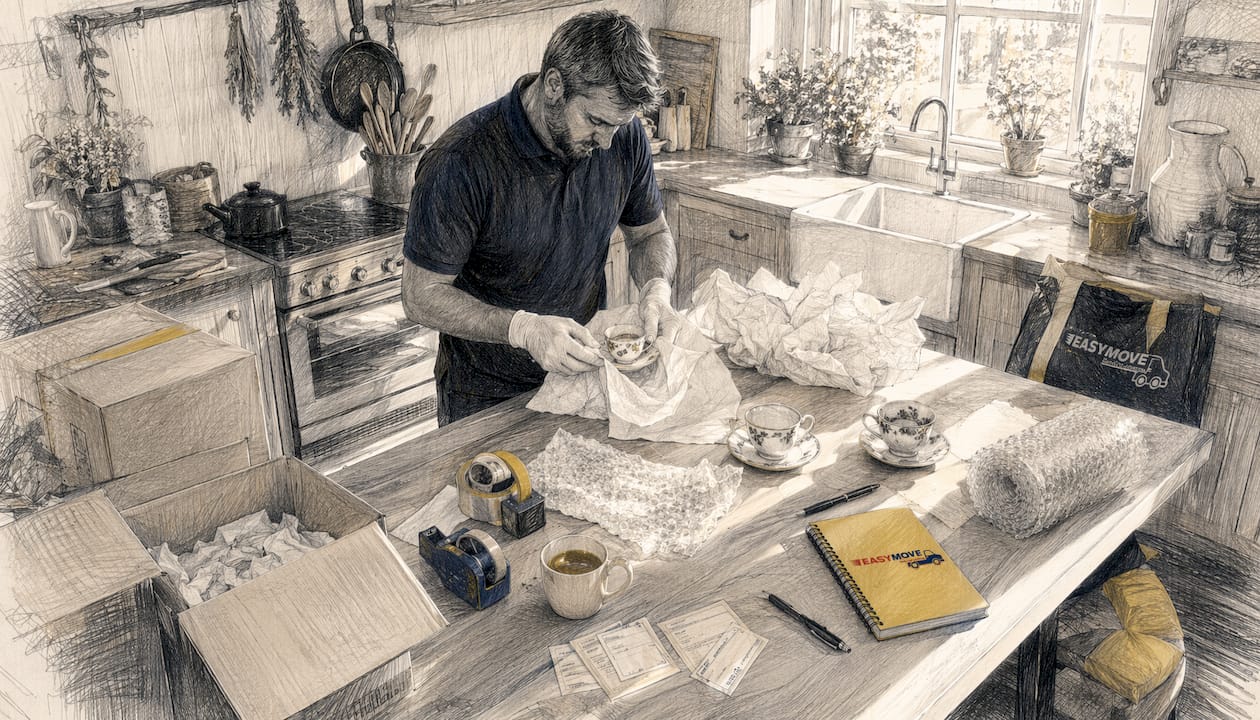
Void filling is non-negotiable. Every gap inside the box needs cushioning material, whether that is crumpled paper, foam peanuts, or air pillows. Professional packing treats the interior of a box like a shock-absorbing suspension system, using layered cushioning and cell dividers matched to the shape of each item. Mirrors and framed artworks travel best in purpose-built mirror boxes with corner protectors and a layer of foam between the glass and the box wall.
Pro Tip: Label every fragile box on all four sides, not just the top. Boxes get rotated during loading, and a single label is easy to miss.
2. Heavy and oversized items: pianos, safes, and pool tables
Heavy and oversized items represent a different category of special care moving examples, where the risk is not just breakage but serious injury and structural damage to your property. Items over 300 lbs, such as residential safes weighing 200–800 lbs, grand pianos, upright pianos, large sculptures, and pool tables, require equipment and techniques that go well beyond a standard moving trolley.
Pianos are the most technically demanding of this group. Piano relocation requires partial disassembly, keyboard locks, padded wrapping, skid boards, and cushioned dollies. On stairs, a stair climber is standard equipment. The internal components of a grand piano must be immobilised before the instrument moves, and the legs are removed and wrapped separately to prevent stress fractures at the joints.
Residential safes present a different challenge. Their weight is concentrated in a small footprint, which makes them prone to tipping and floor damage. Skid dollies with non-slip pads distribute the load, and the path from the safe’s current position to the truck needs to be surveyed for floor type, door widths, and stair clearance before the crew arrives.
- Survey the full path from origin to truck, noting door widths, floor types, and stair dimensions.
- Arrange the right equipment: piano boards, skid dollies, stair climbers, and heavy-duty straps.
- Assign a dedicated crew with training in heavy item handling, not general removalists.
- Confirm the truck has air-ride suspension to reduce vibration during transport.
- Protect floors with hardboard or rubber mats along the entire travel path.
Pro Tip: Book a pre-move site survey for any item over 200 lbs. A 10-minute walkthrough prevents hours of delay and avoids damage claims.
3. High-value and irreplaceable items: fine art, antiques, and designer furniture
High-value item relocation demands a level of care that standard cardboard boxes and packing tape cannot provide. Fine art collections, original paintings, antique furniture, and designer pieces share a common problem: if they are damaged, restoration is expensive and often incomplete. Custom crating costs between $200 and $2,500 depending on size and complexity, and it is the standard threshold for items worth over $500 or anything that is one of a kind.
The packing protocol for antiques and fine art is specific. Moving antiques requires acid-free tissue or glassine as the first layer of wrapping, never plastic directly against the surface. Plastic traps moisture and reacts with antique finishes, causing irreversible staining. Loose parts such as drawer handles, decorative mouldings, and detachable legs are removed and packed separately with clear labelling.
Custom crates go further than cardboard. Custom crates built to the item’s exact dimensions use foam blocking to “float” the piece inside the crate, isolating it from vibration and impact. This technique is the industry standard for original paintings, bronze sculptures, and high-end designer furniture. Climate considerations also apply: antique timber furniture can warp if exposed to humidity swings during a long transit, so climate-controlled transport is worth the additional cost for genuinely irreplaceable pieces.
- Wrap with acid-free tissue first, then add a layer of bubble wrap or foam sheeting.
- Remove all loose or detachable parts and pack them in labelled zip-lock bags taped to the main item.
- Use custom timber crates with foam blocking for anything valued over $1,000 or irreplaceable.
- Request climate-controlled transport for antique timber, original canvases, and lacquered surfaces.
- Photograph every item before packing for insurance documentation.
4. Temperature-sensitive items: wine, instruments, and certain antiques
Temperature-sensitive items are among the most overlooked special care moving examples, and the damage they suffer is often invisible until it is too late. Investment-grade wine, musical instruments such as violins and cellos, and certain antiques with lacquered or veneered surfaces all suffer when exposed to heat spikes or humidity fluctuations during transit.
Investment-grade wine requires climate-controlled storage and insulated shipping to prevent damage. Specialised insulated wine shippers with gel packs maintain a stable temperature range during transit. A single day in a hot truck can permanently alter the chemical composition of a fine wine, making it undrinkable and worthless. The same principle applies to wooden musical instruments: rapid temperature changes cause the timber to expand and contract, which cracks joints and warps soundboards.
Planning the timing of your move matters as much as the packing method. Avoid scheduling temperature-sensitive items for transport during the hottest part of the day, particularly in Australian summer. If your move spans multiple days, arrange climate-controlled storage at the destination end rather than leaving items in a truck overnight. EasyMove Services offers real-time tracking so you always know where your temperature-sensitive belongings are during transit.
Pro Tip: For wine collections, use a dedicated insulated shipper with frozen gel packs, not standard bubble wrap. The gel packs maintain temperature for 24–48 hours, which covers most interstate transit windows.
5. How logistics and planning protect special-care items
Successful special-item relocation depends on logistics as much as packing technique. Detailed logistical planning covers parking distance from the building, elevator reservation windows, stair dimensions, and door clearances. These factors directly affect how safely a crew can move a piano, a safe, or a large sculpture without rushing or improvising.
Experienced movers assess items room by room before the move to flag special-care objects and plan the load sequence. Load sequencing means placing the heaviest and most robust items first, with fragile and high-value pieces loaded last and positioned away from the truck walls. Floor and stair protection using hardboard sheets or rubber runners prevents damage to both the property and the items being moved.
The table below outlines the key logistical checks that apply to special-care moves.
| Logistical factor | Why it matters | What to confirm |
|---|---|---|
| Parking access | Reduces carry distance and handling time | Confirm a clear zone within 10 metres of the entrance |
| Elevator reservation | Prevents delays and rushed handling | Book the service lift for the full move window |
| Stair dimensions | Determines if a piano board or stair climber fits | Measure width and tread depth before move day |
| Floor protection | Prevents scratches and damage claims | Lay hardboard or rubber runners on all travel paths |
| Crew specialisation | Ensures the right skills for the item | Confirm crew training for pianos, safes, or art |
| Load sequence | Protects fragile items from crushing | Pack heavy items first, fragile items last |
Air-ride trucks with advanced suspension systems reduce the micro-vibrations that cause the most damage to high-value items during long-distance transport. This is not a luxury upgrade. For a grand piano or a collection of original artworks, it is the baseline standard. Confirm your removalist uses air-ride vehicles before you book.
Key takeaways
Items needing special moving care require tailored packing, purpose-built equipment, and detailed logistical planning to arrive safely, and identifying them before moving day is the most important step you can take.
| Point | Details |
|---|---|
| Fragile items need individual wrapping | Pack each piece separately in unprinted paper or bubble wrap, with void filling in every box. |
| Heavy items need specialist equipment | Pianos, safes, and pool tables require skid dollies, stair climbers, and trained crews. |
| High-value items need custom crating | Custom timber crates with foam blocking protect irreplaceable pieces from vibration and impact. |
| Temperature-sensitive items need climate control | Wine, instruments, and antique timber need insulated transport and climate-controlled storage. |
| Logistics planning prevents damage | Confirm parking, elevator access, stair dimensions, and load sequence before move day. |
What I’ve learned moving special-care items that most guides won’t tell you
The biggest mistake I see is not the packing. It is the assumption that a standard removalist can handle anything with enough bubble wrap. That thinking costs people thousands of dollars in restoration bills and, worse, the permanent loss of something irreplaceable.
The items that get damaged most often are not the obvious ones. It is rarely the grand piano, because people know to call a specialist for that. The damage happens to the antique sideboard that someone decided to wrap in a moving blanket and slide into the back of a general truck. Or the violin left in a case on the seat of a car during a summer drive. These are the items that fall through the gap between “fragile” and “obviously needs a specialist.”
My honest advice: walk through your home before you book anything and make a list of every item that is either irreplaceable, worth more than $500, heavier than you can comfortably lift alone, or sensitive to heat and humidity. That list is your special-care inventory. Every item on it needs a specific plan, not just extra bubble wrap.
The other thing worth saying plainly: logistics matter more than most people expect. I have seen perfectly packed items damaged because the crew had to rush a staircase due to poor parking access, or because a piano was loaded early and then shifted when the truck was repacked at a second stop. The packing is the foundation, but the plan around it is what holds everything together.
— EasyMovers
Moving special-care items with EasyMove Services
EasyMove Services specialises in the careful handling of fragile, high-value, and oversized items, combining personalised packing services with real-time tracking so you always know where your belongings are.

Whether you are moving a grand piano, a fine art collection, or a wine cellar, EasyMove Services builds a tailored plan around your specific items and access conditions. The team covers everything from pre-move site surveys to climate-controlled transport options. For a clear starting point, the high-value item guide walks you through four practical steps for protecting your most important possessions. EasyMove Services also supports NDIS participants with fully personalised moving and packing services. Get in touch to discuss a plan built around your belongings, no dramas.
FAQ
What items always need special moving care?
Items needing special moving care include grand pianos, residential safes, fine art, antiques, glassware, large sculptures, and temperature-sensitive goods such as wine and musical instruments. These items share traits like structural fragility, high value, unusual weight, or sensitivity to heat and humidity.
How much does custom crating cost for high-value items?
Custom crating costs between $200 and $2,500 depending on the size and complexity of the item. It is the standard protection method for anything valued over $500 or any one-of-a-kind possession that cannot be replaced.
Do pianos need to be disassembled for moving?
Yes. Safe piano relocation requires partial disassembly, including removal of legs and the keyboard lock, plus padded wrapping, skid boards, and cushioned dollies. Stairs require a stair climber, and long-distance transport should use an air-ride truck to reduce vibration.
What packing materials are safe for antiques?
Antiques should be wrapped first in acid-free tissue or glassine, never directly in plastic. Plastic traps moisture and reacts with antique finishes. A second layer of bubble wrap or foam sheeting goes over the acid-free barrier before the item is placed in a custom crate with foam blocking.
Why does logistics planning matter for special-care moves?
Poor logistics, such as limited parking access, narrow stairways, or no elevator reservation, forces crews to rush or improvise, which is when damage happens. Confirming access conditions, load sequence, and crew specialisation before move day is as important as the packing itself.
Recommended
- How Heavy Furniture Gets Moved Safely: A Practical Guide
- How To Move Large Appliances Safely: A Practical Guide
- Why Nursery Furniture Needs Careful Moving: 2026 Guide
- How To Move High Value Items: 4 Easy Steps | EasyMove Services