

Moving interstate as a renter means coordinating lease obligations, upfront rental costs, and removal logistics across state lines, all while navigating tenancy laws that differ significantly between Australian states. Get any one of these wrong and you risk bond disputes, unexpected fees, or weeks of financial overlap. This guide covers every stage of the process: giving proper notice, budgeting for bond and moving costs, choosing a removalist, and settling into your new rental without drama. Whether you are heading from Melbourne to Brisbane or Perth to Sydney, the steps here are built for Australian renters who want a clean, organised transition.
How moving interstate as a renter starts: managing your lease
The first thing to sort out before anything else is your current lease. Tenancy laws vary significantly across Australian states, and the type of lease you hold determines how much notice you must give and what costs you may face.
Periodic vs fixed-term leases
A periodic lease (month to month) gives you the most flexibility. In most states, you need to provide 14 to 28 days written notice to vacate, depending on the jurisdiction. A fixed-term lease is more complicated. Breaking a fixed-term lease is legal in every Australian state, but it typically triggers a lease-break fee and requires your landlord to actively advertise the property to find a replacement tenant. Importantly, your landlord cannot simply charge you rent indefinitely if they fail to re-let the property promptly.
Notice periods differ by state. In Victoria, renters on a fixed-term lease must give 28 days notice. In Queensland, the requirement is also 14 to 28 days depending on circumstances. New South Wales requires 14 days for periodic agreements. Check your state’s tenancy authority website, such as NSW Fair Trading, Consumer Affairs Victoria, or the Residential Tenancies Authority in Queensland, for the exact rules that apply to your situation.
- Use the official notice form issued by your state tenancy authority, not a generic letter.
- Send notice in writing via email and registered post to create a clear paper trail.
- Keep clear records of your landlord’s advertising efforts if you break a fixed-term lease, as this protects you in any cost dispute.
- Request a pre-inspection walk-through a few days before your final inspection to fix minor issues before they become bond deductions.
Pro Tip: Contact your property manager as early as possible, even before you submit formal notice. Early communication reduces misunderstandings and gives your landlord more time to find a new tenant, which directly reduces any break costs you may owe.
What does it cost to move interstate as a renter?
Upfront costs are the biggest shock for renters who have not planned carefully. Budget for at least 7 to 9 weeks of total rent before your move date, covering bond, rent in advance, and moving logistics. That figure does not include lease overlap costs or utility reconnection fees, which can add several hundred dollars more.
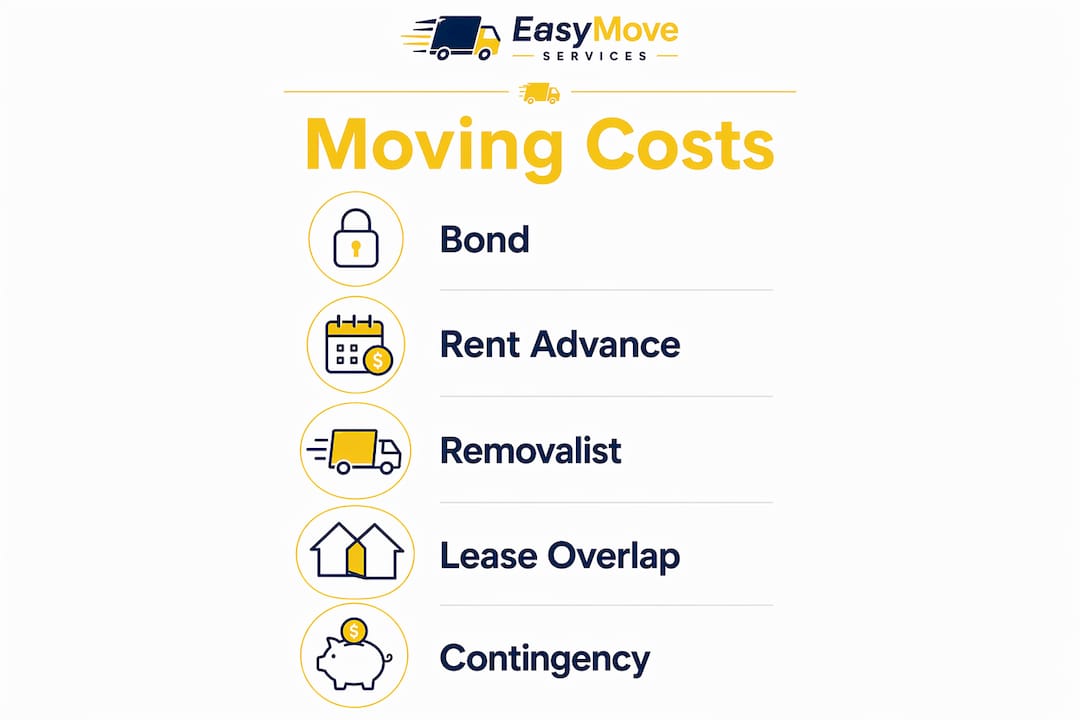
Here is a breakdown of what to expect:
| Cost item | Typical amount | Timing |
|---|---|---|
| Bond (new rental) | 4 weeks’ rent | Due at lease signing |
| Rent in advance | 2 to 4 weeks’ rent | Due at lease signing |
| Interstate removalist | $1,500 to $10,000+ | Paid before or on move day |
| Short-distance or DIY move | $300 to $1,500 | Variable |
| Utility connections | $50 to $200 per service | On connection date |
| Lease overlap (if applicable) | 1 to 4 weeks’ rent | During transition period |
Lease overlap is a cost many renters underestimate. If your new lease starts before your old one ends, you are paying rent on two properties simultaneously. Even a two-week overlap on a $500 per week rental adds $1,000 to your budget. Budgeting frameworks should account for lease overlaps and contingencies beyond just bond and rent deposits.
One practical way to reduce removalist costs is backloading. This means your goods share truck space with another customer’s load, reducing the rate significantly. Backloading provides cost savings by offering flexible delivery windows, and renters are well placed to use it because lease end dates are predictable. For more ideas on cutting costs, the interstate relocation savings tips from Easymoveservices are worth reviewing before you book anything.
Pro Tip: Set aside a contingency fund of at least $500 to $1,000 on top of your estimated total. Unexpected costs, such as a cleaning fee, a minor repair, or a delayed utility connection, are common and rarely budgeted for.
How to choose and coordinate an interstate removalist
Choosing the right removalist is one of the highest-stakes decisions in your entire move. A poor choice costs you money, damages your belongings, or leaves you without your furniture for weeks.

Getting quotes and checking credentials
Secure binding or not-to-exceed quotes in writing before committing to any removalist. A binding quote locks in the price regardless of how long the job takes. A not-to-exceed quote sets a ceiling. Both protect you from bill shock on moving day. Confirm that the company holds public liability insurance and that their transit insurance covers your goods for the full interstate journey, not just loading and unloading.
Check whether the removalist is a member of the Australian Furniture Removers Association (AFRA). AFRA accreditation means the company meets minimum standards for equipment, training, and insurance. For vehicle transport, confirm the company uses enclosed carriers or purpose-built car transport trailers if you are moving a vehicle interstate.
| Moving method | Approximate cost | Effort level | Best for |
|---|---|---|---|
| Full-service removalist | $2,500 to $10,000+ | Low | Large households, long distances |
| Backloading service | $800 to $3,000 | Medium | Flexible timelines, smaller loads |
| DIY hire truck | $500 to $2,000 | High | Small loads, short interstate distances |
| Portable container | $1,200 to $4,000 | Medium | Rural destinations, flexible timing |
- Book your removalist at least 6 to 8 weeks before your move date, especially for peak periods like January and school holiday weeks.
- Confirm what the removalist excludes. Most will not move gas bottles, plants, or perishable food.
- Arrange your move date to align with both your lease end and your new rental start to avoid paying for storage unnecessarily.
For detailed guidance on choosing a removalist, Easymoveservices provides a practical breakdown of what to look for in a long-distance mover.
Utilities, address changes, and settling into your new rental
Once the logistics of the move itself are sorted, the administrative side of renting in a new state needs attention. This is where many renters lose time and money through poor timing.
Timing your utility disconnections and connections
Keep utility services active for at least 24 hours after moving out to allow for final cleaning and the landlord’s inspection. Disconnecting electricity or gas the day you leave can result in reconnection fees if the property manager needs to re-enter. At your new property, plan utility connections to start as soon as possible to prevent service gaps. Contact your energy and internet providers at least two weeks before your move-in date.
Address updates are equally time-sensitive. Missing one can mean lost mail, lapsed insurance, or a fine for not updating your vehicle registration. The key organisations to notify include:
- Your bank and any financial institutions
- Your employer and superannuation fund
- Medicare and any private health insurer
- The Australian Electoral Commission
- Your state’s vehicle registration authority (VicRoads, Transport for NSW, TMR Queensland, etc.)
- Australia Post, using their mail redirection service as a backup
Protecting your bond in the new rental
Conduct a thorough condition report on your new property on or before move-in day. Photograph every room, note every mark, and submit your completed report to the property manager within the timeframe your new state requires. In most states, this is three to five business days. Lodging a bond refund claim promptly at your old property is equally critical. Landlords have limited time to dispute a claim, and unresolved disputes require tribunal hearings that are often conducted remotely for interstate renters.
Pro Tip: Pack a first-night essentials box separately from the rest of your load. Include bedding, a change of clothes, toiletries, phone chargers, and basic kitchen items. When the removalist truck arrives and everything is stacked in boxes, you will not be digging through 40 cartons to find your toothbrush.
Common challenges renters face when moving interstate
Even well-organised moves hit snags. Knowing the most common problems in advance means you can plan around them rather than react to them.
- Mismatched vacate and move-in dates. This is the most frequent cause of lease overlap costs. Negotiate your new lease start date to align as closely as possible with your vacate date, even if it means a few days in temporary accommodation.
- Inadequate documentation. Bond disputes are almost always won or lost on evidence. Photos, written communication, and signed condition reports are your protection.
- Underestimating upfront costs. Renters who have not planned for 7 to 9 weeks of rent in reserve often find themselves short at the worst possible moment.
- Choosing unlicensed movers. An uninsured removalist who damages your furniture has no obligation to compensate you. Always verify credentials before signing anything.
- Overlooking state-specific tenancy rules. Bond lodgement timelines, notice periods, and condition report requirements differ between states. Research your new state’s rules before you sign the lease.
A well-planned moving timeline reduces stress by breaking the move into weekly tasks starting 8 weeks before moving day, covering lease notices, removalist bookings, packing, address updates, and final inspections.
For a full moving checklist covering packing sequences and timeline management, Easymoveservices has a practical resource that works well alongside this guide.
Key takeaways
Successful interstate renting moves depend on early lease action, accurate budgeting, credentialled removalists, and thorough documentation at both the old and new property.
| Point | Details |
|---|---|
| Start with your lease | Identify whether you hold a periodic or fixed-term lease and check your state’s notice requirements before anything else. |
| Budget for 7 to 9 weeks of rent | Account for bond, rent in advance, moving costs, and lease overlap to avoid financial shortfalls. |
| Use binding quotes | Always get a binding or not-to-exceed quote in writing and confirm AFRA accreditation before booking a removalist. |
| Document everything | Condition reports, photos, and written communication protect your bond at both ends of the move. |
| Update addresses early | Notify banks, employers, Medicare, electoral commissions, and vehicle registration authorities before or on move day. |
What I have learnt from interstate rental moves
From my experience working with renters across Australia, the single biggest mistake I see is treating the move as a transport task rather than an operational project. People book the truck and assume the rest will sort itself out. It rarely does.
The renters who have the smoothest transitions are the ones who start eight weeks out, not two. They have already checked their state tenancy authority’s website, confirmed their notice period, and spoken to their property manager before they have even found a new place to live. That early groundwork removes most of the stress that hits everyone else in the final fortnight.
I also think the financial side is consistently underestimated. Most renters think about bond and the removalist quote. Very few think about the lease overlap, the utility reconnection fees, or the cost of a cleaning service if the property is not left in perfect condition. Build those into your budget from day one and you will not be scrambling.
Finally, do not skip the condition report at your new property. I have seen renters lose hundreds of dollars at the end of a tenancy because they did not document pre-existing damage on arrival. It takes 30 minutes and it is the best insurance you have.
— John
How Easymoveservices supports your interstate rental move

Moving interstate as a renter involves more moving parts than most people expect, and having the right removalist makes a real difference to how the day unfolds. Easymoveservices combines live tracking technology with personalised packing and moving services, so you always know where your belongings are in transit. Whether you need a full-service move or a carefully coordinated backloading arrangement, the team works around your lease dates and budget. For renters who want to get the selection process right from the start, the guide on choosing the right removalist covers everything from accreditation checks to insurance verification. Get in touch with Easymoveservices for a personalised quote and take the guesswork out of your interstate move.
FAQ
How much notice do I need to give when moving interstate?
Notice periods depend on your lease type and state. Periodic leases typically require 14 to 28 days written notice, while fixed-term leases may involve break fees and landlord obligations to re-let the property promptly.
How do I find rentals interstate before I move?
Search platforms such as realestate.com.au and Domain list properties by suburb and price. Apply online and request virtual inspections, as most property managers in major cities now accommodate remote applicants.
What upfront costs should I budget for when renting in a new state?
Budget for at least 7 to 9 weeks of rent to cover bond (4 weeks), rent in advance (2 to 4 weeks), and moving logistics ($300 to $10,000 depending on distance and load size).
Do interstate lease agreements differ from state to state?
Yes. Bond lodgement timelines, condition report requirements, and notice periods all vary by state. Research your new state’s tenancy authority website before signing any lease to understand your obligations as a tenant.
Can I use backloading to reduce my interstate moving costs?
Backloading is one of the most effective ways to reduce removalist costs. Because your lease end date is fixed and predictable, you can offer a flexible delivery window, which is exactly what backloading operators need to offer you a reduced rate.
Recommended
- Interstate Moving Planning Guide For AU Moves | EasyMove Services
- What Are The Best Tips For Moving Interstate With Ease | EasyMove Services
- How To Choose The Right Interstate Removalist For Long Move
- 7 Hot Tips For Saving Money On Your Interstate Relocation
Article generated by BabyLoveGrowth