

Moving interstate with valuables is defined as relocating high-value, fragile, or irreplaceable personal items across Australian state lines, requiring specialised packing, security measures, and careful transport planning. Whether you are shifting a household from Melbourne to Brisbane or relocating from Sydney to Perth, the risks multiply with distance. Jewellery, electronics, artwork, and family heirlooms each demand a different protection strategy. This guide walks you through every step, from choosing the right packing materials to selecting a removalist who treats your belongings as seriously as you do.
What are valuables and why are they challenging to move interstate?
Valuables in a moving context include any item that is financially significant, emotionally irreplaceable, or physically fragile. The most common categories are electronics such as laptops and televisions, jewellery and watches, original artwork, antiques, fine china, and important documents like passports and property titles.
Interstate moves introduce risks that a local move simply does not. The greater the distance, the more handling points your goods pass through. Each transfer between trucks, depots, or drivers adds a new opportunity for damage, misplacement, or theft. Long-distance road transport also exposes items to vibration, temperature changes, and shifting loads inside the truck.

Common problems include inadequate wrapping that allows items to knock against each other, boxes that are too large and allow contents to move freely, and insufficient documentation that makes insurance claims difficult. Artwork and mirrors are particularly vulnerable because standard cardboard boxes offer no rigid support against road vibration. Electronics face a different threat: lithium battery transport regulations require that devices with lithium batteries travel in personal hand luggage, not in a moving truck.
Understanding these risks before you pack is the difference between your grandmother’s vase arriving intact and arriving in pieces.
What packing materials and supplies do you need for valuables?
The right materials are not optional extras. They are the first line of defence for your belongings.
Core packing materials:
- Double-walled cardboard boxes for heavy or dense items like books and small appliances
- Bubble wrap (minimum two layers) for glass, ceramics, and electronics
- Foam sheets and foam corner protectors for picture frames, mirrors, and screens
- Packing paper to fill void space and prevent movement inside boxes
- Moving blankets for protecting furniture surfaces and large fragile items during transit
- RFID-blocking sleeves to protect credit and debit cards from electronic theft during the move
- Lockable containers or cash boxes for jewellery, passports, and small high-value items
| Material | Purpose | Best used for |
|---|---|---|
| Double-walled boxes | Structural strength under load | Electronics, ceramics, books |
| Bubble wrap | Shock absorption | Glass, ornaments, screens |
| Foam sheets | Rigid surface protection | Mirrors, artwork, framed photos |
| Moving blankets | Surface and edge protection | Furniture, large appliances |
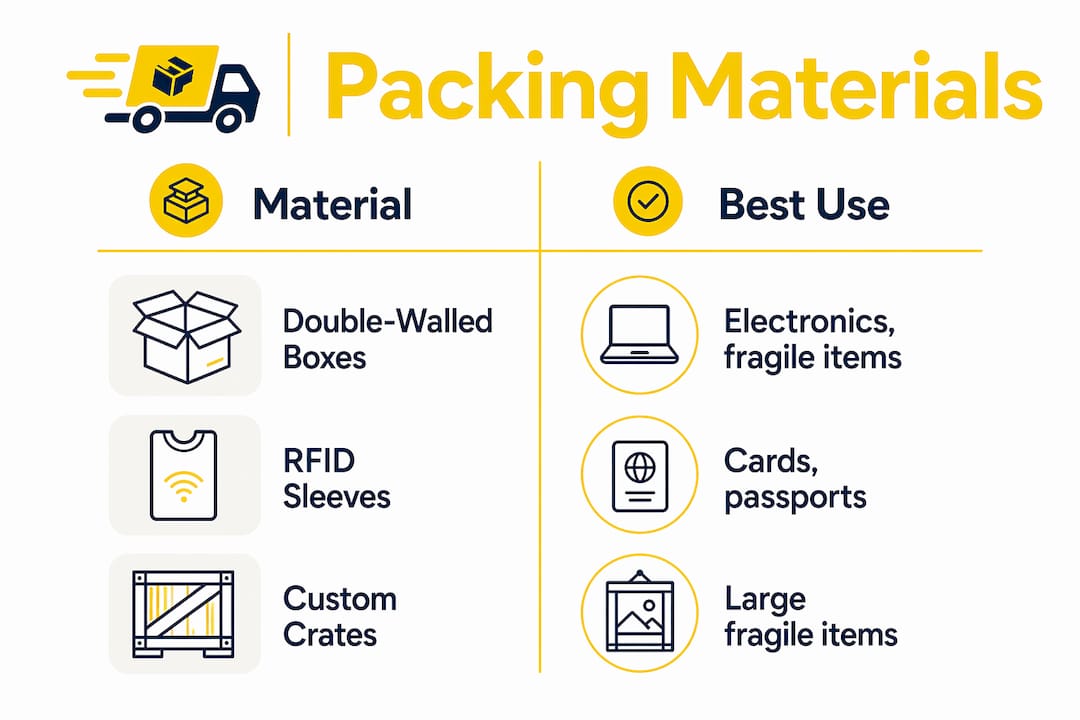
| RFID-blocking sleeves | Electronic theft prevention | Cards, passports |
| Lockable containers | Physical security | Jewellery, cash, documents |
| Custom wooden crates | Maximum rigid protection | Chandeliers, marble, large art |
RFID-blocking sleeves protect cards and passports from electronic skimming during transit. This is a low-cost addition that many people overlook until something goes wrong.
Pro Tip: Investing in eco-friendly packing materials such as recycled bubble wrap and biodegradable foam not only reduces waste but often provides equivalent or better cushioning than standard options.
For large fragile items like chandeliers, marble tabletops, or original oil paintings, custom wooden crates provide rigid, dimension-specific support that cardboard simply cannot match. Professionals build these crates to the exact measurements of the item, eliminating internal movement entirely.
How to pack valuables step by step for an interstate move
Treat packing as an operational project, not a last-minute task. A room-by-room approach keeps you organised and reduces the chance of overlooking something important.
1. Create a valuables inventory first. Walk through every room and list each high-value or fragile item. Photograph each item from multiple angles before packing. This documentation is critical for insurance claims if anything is damaged in transit.
2. Sort items by fragility and value. Group items into three categories: carry with you personally, pack with specialist materials, and pack with standard materials. Your most important items, including passports, primary bank cards, jewellery, and laptops, belong in the first category.
3. Wrap each item individually. Use at least two layers of bubble wrap for glass and ceramics. Secure the wrap with packing tape, not rubber bands, which can leave marks. Foam corner protectors go on picture frames and mirrors before any other wrapping.
4. Pack centrally inside boxes. Centre-packing valuables inside boxes, surrounded by soft clothing or packing paper, conceals them and absorbs impact from all sides. Never pack a fragile item directly against the box wall.
5. Fill every void. A box that rattles is a box that breaks. Fill all empty space with crumpled packing paper or foam peanuts until the contents cannot shift when you shake the box gently.
6. Label clearly and specifically. Write “FRAGILE” on all four sides and the top of each box. Add a brief contents description such as “crystal glasses x6” so removalists know what they are handling. Keep a copy of your inventory list separate from the boxes.
7. Seal boxes properly. Use at least three strips of packing tape on the bottom seam and two on the top. A box that opens in transit is as dangerous as one that was never sealed.
Pro Tip: For irreplaceable large items like antique mirrors or marble surfaces, custom crating by professionals is the gold standard. The cost is a fraction of the replacement value of most high-end pieces.
A common mistake is double-boxing without filling the space between the inner and outer box. That gap needs foam or packing paper. Without it, the inner box still moves freely and the double-wall offers no real benefit. For more detailed guidance on packing fragile items safely, a step-by-step approach makes a measurable difference.
What are the best methods for transporting valuables safely?
The safest transport method depends on the value and replaceability of each item. Not everything belongs in the moving truck.
Security experts recommend carrying the most important valuables on your person rather than placing them in the moving truck. Passports, primary bank cards, jewellery, and laptops should travel with you in a dedicated bag that never leaves your sight. This eliminates theft and loss risk entirely for your highest-priority items.
Transport method comparison:
| Method | Best for | Pros | Cons |
|---|---|---|---|
| Personal carry | Jewellery, documents, electronics | Zero transit risk, immediate access | Limited capacity |
| Professional removalist | Furniture, packed boxes, large items | Insured, tracked, specialist handling | Cost, scheduling |
| Courier service | Single high-value items | Fast, trackable | Limited insurance, size restrictions |
| Self-drive hire truck | Full household, budget-conscious | Full control | Physical effort, no specialist packing |
Professional removalists who specialise in high-value item handling provide end-to-end tracking and clear claims processes. Not all carriers treat valuables equally. Choosing a specialist reduces risk and gives you a defined process if something does go wrong.
Requiring a signature on delivery and adult verification significantly reduces the risk of theft or misdelivery for high-value packages. If your removalist offers a “hold for pickup” option for sensitive items, use it.
Insurance is non-negotiable for interstate moves involving valuables. Declared-value insurance covering the full appraised amount of each item is the correct approach. Read the fine print carefully. Some policies exclude pre-existing damage or cap payouts for specific item categories like jewellery or electronics. A policy that does not cover your actual loss is not worth the paper it is printed on.
Real-time tracking technology adds another layer of confidence. Knowing where your goods are at any point during the journey reduces anxiety and allows you to act quickly if something appears off-schedule.
How do you choose the right removalist for moving valuables interstate?
Choosing the right removalist is as important as how you pack. A poorly chosen carrier can undo every precaution you have taken.
What to look for in a removalist:
- Demonstrated experience with high-value or fragile item transport
- Clear, written insurance options with declared-value coverage
- Real-time tracking technology so you can monitor your goods in transit
- Transparent claims process with defined timeframes
- Verified customer reviews that specifically mention fragile or valuable items
- Willingness to answer detailed questions about their handling procedures
Ask directly: “How do you handle items like original artwork or antique furniture?” A removalist who gives a vague answer is telling you something important. The right company will describe their wrapping process, load sequence, and how they secure items inside the truck.
Credentials matter too. Check that the company holds current public liability insurance and, where relevant, is a member of the Australian Furniture Removers Association (AFRA). AFRA membership requires companies to meet minimum standards for equipment, training, and insurance.
Easymoveservices combines real-time tracking technology with personalised packing services for interstate moves, including support for NDIS participants. For guidance on choosing the right removalist for a long-distance move, matching the company’s experience to your specific needs is the deciding factor.
Cost matters, but it should not be the primary filter. The cost of interstate movers varies based on volume, distance, and the level of specialist handling required. A quote that seems low often excludes insurance, specialist packing, or real-time tracking. Get at least three itemised quotes and compare what is actually included.
Key takeaways
Moving interstate with valuables safely requires a combination of proper packing materials, a clear transport plan, and declared-value insurance that covers your actual losses.
| Point | Details |
|---|---|
| Carry the highest-value items yourself | Passports, jewellery, and laptops should travel with you, not in the truck. |
| Use the right packing materials | Double-walled boxes, bubble wrap, foam sheets, and custom crates match protection to item type. |
| Insure for declared value | Read the fine print and confirm your policy covers the full appraised amount of each item. |
| Choose a specialist removalist | Look for real-time tracking, clear claims processes, and verified experience with valuables. |
| Document everything before packing | Photographs and a written inventory make insurance claims straightforward if damage occurs. |
What I have learned from moving valuables interstate
I have seen a lot of interstate moves go sideways, and the pattern is almost always the same. People spend weeks researching removalists and then pack their most valuable items in whatever boxes are left over from the supermarket run. The packing is where most damage actually happens, not in the truck.
The other thing people consistently underestimate is insurance. Declared-value coverage sounds straightforward until you read the exclusions. I have spoken with people who discovered their policy capped jewellery claims at a fraction of the item’s actual worth. That is a painful lesson to learn after the fact.
My honest recommendation is to treat your valuables inventory as a separate project from the rest of the move. List every item, photograph it, and decide individually how it travels. Some things belong in a custom crate. Some things belong in your handbag. Getting that distinction right before moving day saves a lot of grief.
The cost versus protection question comes up constantly. My view is simple: if an item cannot be replaced, the cost of protecting it properly is not optional. A custom crate for a $4,000 painting costs a fraction of the painting’s value. The maths is not complicated.
For anyone planning an interstate move with fragile items, the detail work done before moving day is what determines the outcome.
— John
How Easymoveservices can help you move valuables interstate
Moving valuable and fragile items interstate is not a task that rewards cutting corners. Easymoveservices provides personalised packing and moving services with real-time tracking technology, so you know exactly where your belongings are throughout the journey. The team works with individuals, families, and NDIS participants across Australia, with experience handling high-value items that require specialist care.

If you are planning an interstate move and want a team that takes your valuables as seriously as you do, start with the right information. The professional packing services offered by Easymoveservices are designed to match the level of protection to the value of each item, no dramas. Reach out to discuss your specific requirements and get a tailored quote for your move.
FAQ
What counts as a valuable item for an interstate move?
Valuables include electronics, jewellery, original artwork, antiques, fine china, important documents, and any item that is financially significant or emotionally irreplaceable. If replacing or repairing it would cause real hardship, treat it as a valuable.
Should I carry valuables with me or put them in the moving truck?
Carry the highest-value items personally. Passports, jewellery, laptops, and primary bank cards should travel with you in a dedicated bag, as this eliminates theft and loss risk entirely for those items.
What type of insurance do I need for moving valuables interstate?
Declared-value insurance covering the full appraised amount of each item is the correct approach. Read the policy carefully, as some plans cap payouts for jewellery or electronics and exclude pre-existing damage.
How do I find a removalist experienced with high-value items?
Look for removalists with verified reviews mentioning fragile or valuable items, clear written insurance options, real-time tracking, and membership in the Australian Furniture Removers Association (AFRA). Ask specific questions about their handling and load-securing procedures.
Do I need custom crating for large fragile items?
Custom wooden crates are the most effective protection for large fragile valuables such as mirrors, marble surfaces, and original paintings. They provide rigid, dimension-specific support that standard cardboard boxes cannot replicate on long-distance road moves.
Recommended
- What Are The Best Tips For Moving Interstate With Ease | EasyMove Services
- Interstate Moving Planning Guide For AU Moves | EasyMove Services
- Moving Interstate As A Renter: Your Practical Guide
- 7 Hot Tips For Saving Money On Your Interstate Relocation