

Packing materials are the primary defence between your belongings and the damage that transit causes. The role of packing materials in a home move goes well beyond wrapping a few plates in newspaper. Professional removalists call this approach layered protection, and it is the industry standard for any relocation where goods need to arrive intact. The right combination of strong double-walled boxes, bubble wrap, packing paper, and void fillers works together to prevent shifting, absorb shocks, and stop surface scratches. Get this combination right and your move becomes an organised, low-stress operation. Get it wrong and you are dealing with cracked crockery and dented furniture before you have even unpacked.
What are the types of packing materials and their roles?
Every material in your packing kit serves a specific function. Understanding what each one does helps you make smarter choices before moving day.
Double-walled corrugated boxes are the structural backbone of any move. The Edge Crush Test (ECT) rating on a box determines how much stacking pressure it can handle. High-ECT double-walled boxes protect fragile goods during long moves far better than standard single-wall cartons. Think of them as the load-bearing walls of your packing system.
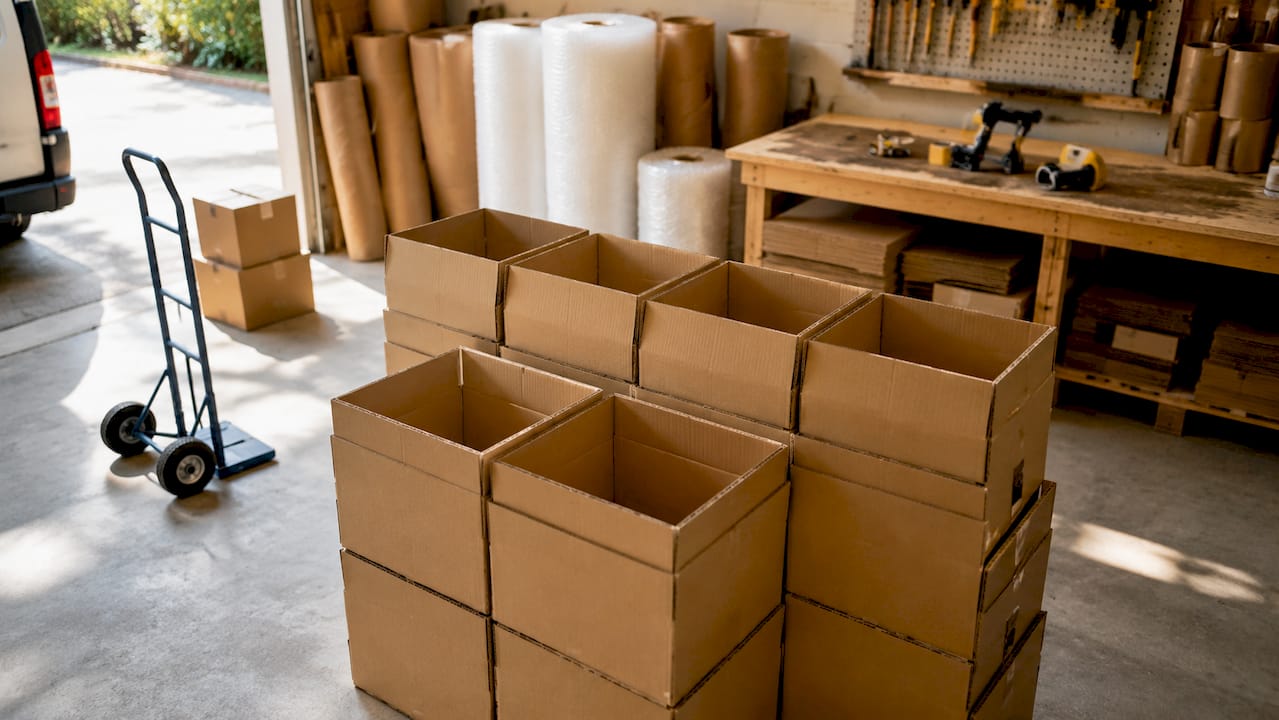
Packing paper is the unsung workhorse of the kit. It wraps individual items to prevent surface scratches, and you can crumple it to fill small voids inside boxes. Unlike newspaper, unprinted packing paper leaves no ink residue on your belongings, which matters for white crockery, glassware, and light-coloured linen.
Bubble wrap provides shock absorption. It cushions fragile items against the jolts and vibrations that happen during road transport. Bubble wrap works best as a secondary layer, not a primary one, because it does not prevent scratches on its own.
Void fillers such as biodegradable packing peanuts and crumpled kraft paper immobilise contents inside the box. Void fillers fill gaps and meet the “no rattle” packing standard that professional movers use to confirm a box is packed correctly.
Moving blankets and stretch wrap protect furniture surfaces from scratches and scuffs during loading and transit. Stretch wrap also bundles loose components together, such as drawer handles and table legs, so nothing goes missing.
Pro Tip: Build a dedicated packing station in one room with all your materials laid out before you start. This keeps your workflow consistent and stops you from running out of tape mid-box.
Why is layered protection the safest strategy?
Layered protection combining strong boxes, packing paper, bubble wrap, and void fill is the safest approach to packing fragile household goods. The reason is straightforward: each material addresses a different threat, and no single material covers all of them.
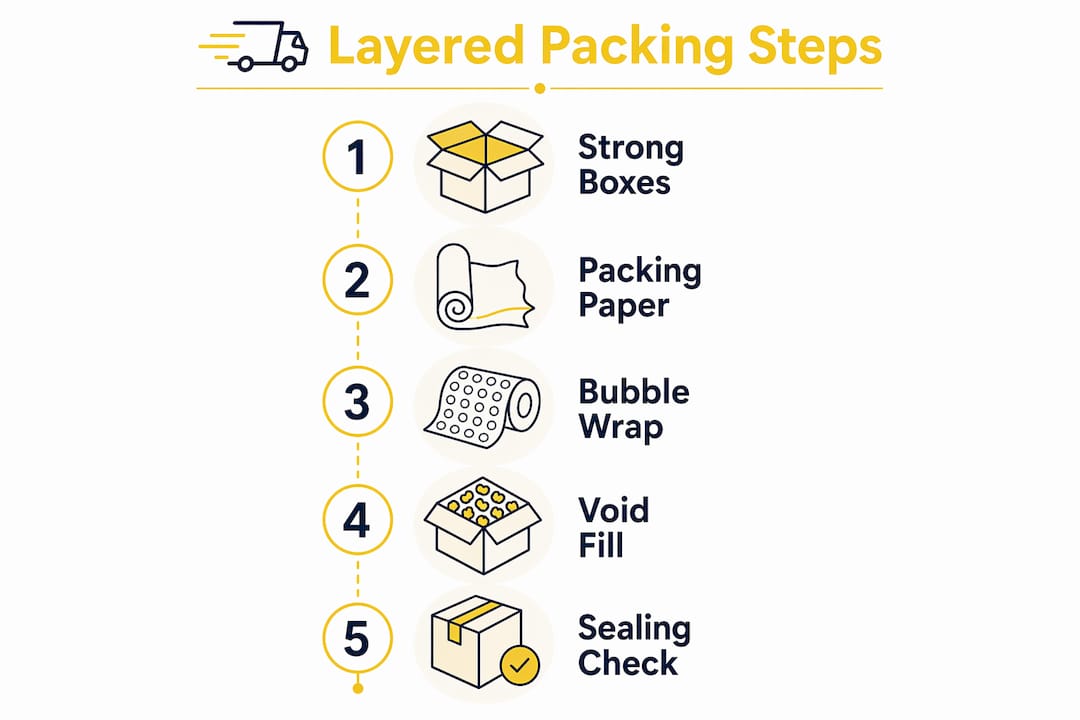
Consider a set of wine glasses. Packing paper wraps each glass individually to prevent scratches where glass touches glass. Bubble wrap then cushions each wrapped glass against impact. The glasses sit upright in a double-walled dish pack box, and crumpled packing paper fills every gap so nothing shifts. This three-layer system addresses scratches, shock, and movement simultaneously. Relying on bubble wrap alone would leave the glasses vulnerable to scratches and box collapse under stacking pressure.
The table below compares single-material packing against a layered approach across the most common threat types during a home move.
| Threat type | Single material (bubble wrap only) | Layered approach |
|---|---|---|
| Surface scratches | Not protected | Packing paper prevents contact damage |
| Impact and shock | Partially absorbed | Bubble wrap absorbs jolts effectively |
| Internal shifting | Not controlled | Void fillers immobilise contents |
| Box collapse under stacking | Not addressed | Double-walled ECT-rated box resists pressure |
| Long-distance vibration | Partially absorbed | Combined layers dampen sustained movement |
Movement inside boxes during a 4–8 hour move can cause damage such as cracked dishes or dented lamp bases. That is the practical cost of skipping void fillers. A box that sounds solid when you shake it is a box that is packed correctly.
Pro Tip: Before sealing any box, give it a firm shake. If you hear or feel anything moving inside, add more crumpled packing paper until the contents are completely immobilised.
How do you choose the best packing materials for your move?
Selecting the right packing supplies comes down to matching your materials to your items. Here is a practical framework for making those decisions before you start packing.
1. Match box strength to content weight and fragility. Heavy items like books and kitchen appliances need small, sturdy boxes so the base does not give way. Lighter items like linen and clothing can go into larger boxes without risk. Professional-grade packing materials maximise durability and protection compared to improvised or low-quality supplies.
2. Avoid grocery store boxes for anything fragile or heavy. Used boxes lose 20–30% compressive strength after one use cycle and vary in size, making stacking unreliable. They are fine for soft toys or pillows, but not for your good crockery or the television.
3. Use specialty boxes for awkward or high-value items. Specialty boxes like wardrobe boxes and TV boxes reduce movement and damage risk by fitting items correctly. A wardrobe box lets hanging clothes travel without creasing. A TV box holds a flat screen securely without improvised padding. You can find a full packing materials checklist to help you plan what specialty items you need.
4. Consider eco-friendly options. Biodegradable packing peanuts and recycled kraft paper offer similar protective qualities to conventional materials with a reduced environmental footprint. Sustainability is a growing priority in 2026 moves, and the good news is that going green does not mean compromising protection. Easymoveservices covers this in detail on their guide to sustainable packing options.
5. Set up a packing station before you begin. A well-organised packing process includes the right box sizes, enough tape, markers, and labelling tools all in one place. Running out of bubble wrap halfway through packing your kitchen is a disruption you do not need on moving day.
Pro Tip: Order 20% more packing paper and tape than you think you need. You will use it. Running short mid-pack forces rushed decisions that lead to under-protected boxes.
What common packing mistakes compromise protection?
Most moving damage is preventable. The mistakes below account for the majority of breakages and losses during residential relocations.
- Using weak or inconsistent boxes. Grocery store boxes and random cartons from the recycling bin vary in size and strength. This makes stacking unstable and increases the risk of box failure under load.
- Leaving void space unfilled. Empty space inside a box allows items to shift during transit. Even a short drive can cause enough movement to crack a plate or chip a glass if the box is not fully packed.
- Relying on a single material. Bubble wrap alone does not prevent scratches or box collapse. Packing paper alone does not absorb shock. The layered system mindset is the consensus among movers in 2026 because combining materials covers every threat type.
- Skimping on tape. A single strip of tape on a box base is not enough for anything heavier than a few kilograms. Use the H-taping method: tape along the seam and then two strips perpendicular across the base. Quality packing tape holds; cheap tape peels under weight and humidity.
- Ignoring labels. Boxes without clear labels get stacked incorrectly, placed in the wrong room, and opened last when you need them first. Label every box on two sides with contents and destination room.
- Leaving packing to the last minute. Rushed packing means under-filled boxes, mismatched materials, and forgotten fragile items. Assembling all materials early in a dedicated packing area avoids interruptions and improves your overall packing rhythm. For more guidance on packing fragile items safely, Easymoveservices has a dedicated resource worth reading before you start.
Key takeaways
Layered protection using ECT-rated double-walled boxes, packing paper, bubble wrap, and void fillers is the most reliable way to prevent damage during a home move.
| Point | Details |
|---|---|
| Layered protection is the standard | Combine boxes, packing paper, bubble wrap, and void fillers to cover every damage threat. |
| Box quality determines stacking safety | Use high-ECT double-walled boxes for fragile and heavy items; avoid used grocery boxes. |
| Void fillers are non-negotiable | Fill every gap inside boxes and use the shake test to confirm contents are immobilised. |
| Specialty boxes reduce damage risk | Wardrobe boxes, dish packs, and TV boxes fit items correctly and prevent movement. |
| Eco-friendly materials are now viable | Biodegradable peanuts and recycled kraft paper offer equal protection with less waste. |
What I have learned from watching moves go wrong
I have seen a lot of moves over the years, and the ones that go badly almost always share one thing in common: the packing materials were an afterthought. Someone grabbed whatever boxes were free from the supermarket, wrapped a few things loosely in newspaper, and assumed the removalists would handle the rest. They do not. Removalists handle transport. Protection is your responsibility before the truck arrives.
The cost of quality packing supplies is genuinely small compared to the cost of replacing a broken television, a chipped set of crockery, or a scratched timber dining table. A roll of quality bubble wrap and a pack of double-walled boxes might set you back $80–$120. A replacement flat screen costs ten times that. The maths is not complicated.
What I find most encouraging about 2026 is that eco-friendly materials have genuinely caught up. Biodegradable packing peanuts and recycled kraft paper now perform at the same level as conventional options. You no longer have to choose between protecting your goods and reducing your environmental impact. That is a real shift from even three years ago.
My honest advice: treat your packing materials as seriously as you treat your moving budget. Plan your supplies list early, buy more than you think you need, and set up a proper packing station before you touch a single box. The moves that go smoothly are the ones where the packing was done right, not fast.
— John
How Easymoveservices can take the stress out of packing
Choosing the right packing supplies and applying them correctly takes time, knowledge, and the right materials on hand. Easymoveservices provides professional packing services that cover everything from sourcing quality double-walled boxes and bubble wrap through to wrapping and boxing your most fragile and high-value items. The team brings the materials, the method, and the experience so you do not have to figure it out on the fly.

Whether you are moving across Melbourne or interstate, Easymoveservices combines personalised packing support with real-time tracking so you always know where your goods are. For those moving high-value or delicate items, their guide on moving high-value items is a practical starting point. No dramas, no guesswork. Just a move done properly.
FAQ
What is the most important packing material for a home move?
Double-walled corrugated boxes with a high ECT rating are the most critical material because they provide structural support and resist stacking pressure throughout the move. All other materials, including bubble wrap and void fillers, depend on a strong box to be effective.
How do I know if a box is packed correctly?
Give the sealed box a firm shake. If you hear or feel any movement inside, the box needs more void fill such as crumpled packing paper or biodegradable peanuts. A correctly packed box produces no rattle and feels solid.
Can I use second-hand boxes from the supermarket?
Used boxes lose 20–30% of their compressive strength after one use cycle and are only suitable for non-fragile, lightweight items like clothing or linen. For anything fragile or heavy, use new professionally manufactured moving boxes.
Are eco-friendly packing materials as protective as conventional ones?
Biodegradable packing peanuts and recycled kraft paper offer comparable protection to conventional materials. They are a practical choice for 2026 moves where reducing waste is a priority without sacrificing the safety of your belongings.
Do I need specialty boxes or will standard boxes do?
Specialty boxes such as wardrobe boxes, dish packs, and TV boxes are worth the investment for awkward or high-value items. They fit items correctly, reduce internal movement, and are part of professional packing standards used by experienced removalists.
Recommended
- Moving To A New Home | Simple Tips For A Smooth Move
- Smart And Essential Packing Tips For Your Move
- Smart Home Move Tips | Move Stress-free
- Packing For A Move Made Easy – Room By Room Guide