

The role of tenant when hiring movers is to actively manage the relocation as an operational project, not simply hand over keys and wait. You are responsible for securing binding contracts, coordinating building access, documenting property condition, and budgeting for costs that rarely appear in a headline quote. Tenants who treat this process casually risk losing their security deposit, facing surprise invoices, or arriving at a new property without power. This guide covers every practical responsibility you need to own before, during, and after moving day.
What is the role of tenant when hiring movers?
The tenant’s role when hiring professional removalists is to act as the project coordinator between the moving company, the landlord, and building management. This means more than booking a truck. You are responsible for verifying the mover’s credentials, obtaining the correct paperwork, scheduling access, and protecting your belongings and deposit through documentation. Treating the move like a professional engagement rather than a casual arrangement is what separates a smooth relocation from a costly dispute.
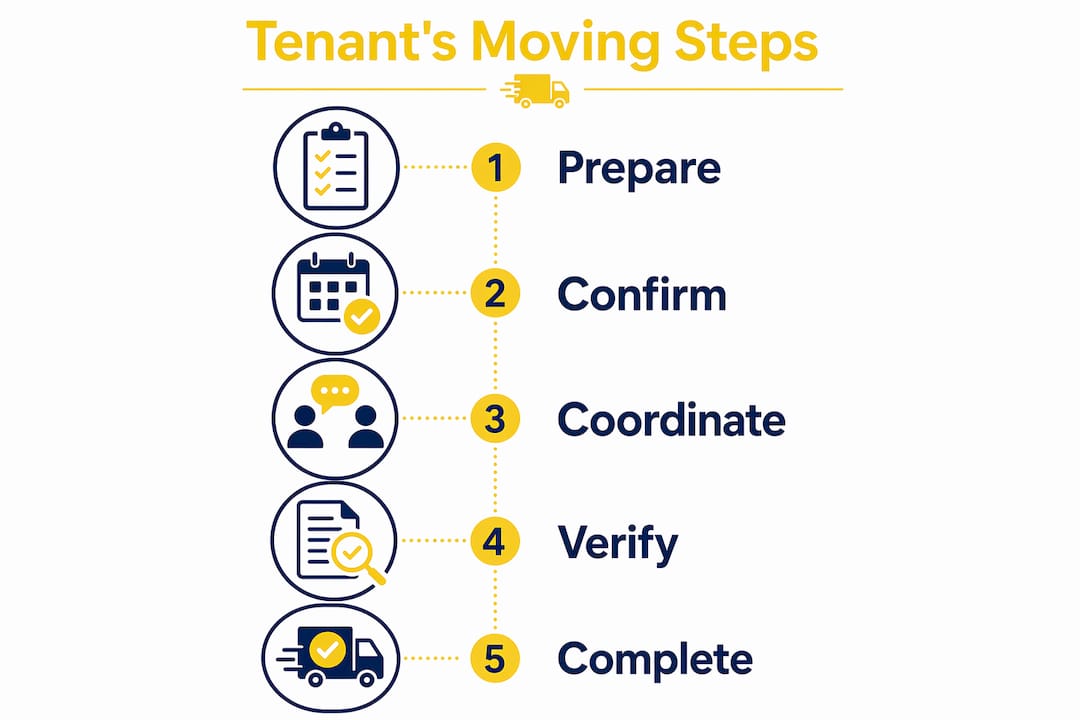
Tenant responsibilities during relocation span three distinct phases: pre-move preparation, move-day coordination, and post-move follow-up. Each phase carries specific obligations that, if missed, create financial or legal exposure. The sections below break each phase into concrete, manageable steps.

What documents and agreements should tenants secure from movers?
Paperwork is your financial protection. Binding written estimates must detail all costs including packing, labour, transport, taxes, and potential extras such as stairs, long carries, or elevator delays. This prevents surprise invoices on moving day, which remain one of the most common complaints tenants raise against removalists.
Beyond the quote, reputable movers provide a specific set of documents that protect you against loss or damage. Good movers supply a binding quotation, consignment note, bill of lading, transit insurance policy, and a GST invoice before the truck is loaded. Collecting these beforehand prevents confusion and makes insurance claims straightforward if something goes wrong in transit.
The table below summarises the core documents to request and what each one does for you.
| Document | Purpose |
|---|---|
| Binding written estimate | Locks in all costs including extras; prevents surprise charges on moving day |
| Consignment note | Records items handed to the mover; forms the basis of any damage claim |
| Bill of lading | Legal contract between you and the removalist for goods in transit |
| Transit insurance policy | Covers loss or damage to your belongings during the move |
| GST invoice and payment receipt | Confirms payment and is required for any tax or dispute resolution |
Staff verification is worth raising separately. Ask the moving company for proof of their business registration and, where applicable, evidence that their crew are employed rather than subcontracted. Some strata buildings also require a society permission document or a certificate of currency before granting access. Requesting these upfront avoids the scenario where movers arrive and are turned away at the gate.
Pro Tip: Request all documents in writing at least 48 hours before moving day. Verbal confirmations carry no weight in a dispute.
How should tenants coordinate with landlords and building management?
Building management rules are non-negotiable, and failure to comply leads to denied access and costly rescheduling fees. Strata and property managers have strict policies to protect common property, and they will enforce them regardless of how inconvenient the timing is for you. Coordination with both your landlord and the building manager is a core tenant responsibility during relocation, not an optional courtesy.
Follow these steps to manage building access correctly:
- Contact building management at least one week before your move to confirm their specific requirements for elevator bookings, loading bay access, and protective padding for common areas.
- Book the elevator and loading bay at least 48 hours before moving day and get written confirmation of your reserved time slot.
- Provide proof of the moving company’s public liability insurance or pay the building’s refundable damage deposit. Keep your receipt.
- Schedule your removalists to arrive and complete the move within your reserved window. Overrunning the slot can trigger fines or conflict with another tenant’s booking.
- Request a pre-move-out inspection with your landlord 14 to 30 days before moving. This identifies any issues you can rectify before vacating, which directly protects your bond.
- At the inspection, obtain a signed condition report and photograph every room, wall, and fixture. A joint inspection with photos reduces disputes and enables fair deductions rather than blanket bond claims.
Pro Tip: If your building requires a damage deposit from the moving company, confirm with your removalist that they carry this as standard. Easymoveservices includes this coordination as part of their service process, so there are no dramas on the day.
Why should tenants create detailed inventories before movers arrive?
Tenants routinely overlook photo and video inventories before loading begins, and this is the single most common reason security deposit disputes go against them. Once the truck leaves, your ability to prove the pre-existing condition of your belongings and the property depends entirely on what you recorded beforehand. This visual record is your only defence in a damage claim or bond deduction argument.
The practical process is straightforward. Walk through every room with your phone and record a continuous video, narrating what you see. Follow up with still photos of furniture legs, wall corners, appliance surfaces, and any pre-existing marks or scuffs. Do this on the morning of the move, after all items are packed but before the removalists begin loading.
“Storing your move folder in the cloud, with your lease, inspection forms, utility confirmations, and photo records all in one place, means you can access evidence from any device at any time.” Source: NoBroker forum guidance, 2026
A cloud folder also protects you if your phone is lost or damaged during the move. Use Google Drive, iCloud, or Dropbox and share access with a trusted contact. Your moving house checklist should include creating this folder as a non-negotiable step, not an afterthought.
How should tenants budget for hidden moving costs?
The headline quote from a removalist covers transport and labour. It rarely covers everything you will actually spend. Starting your planning 6 to 8 weeks ahead with a detailed budget that includes deposits, cleaning, packing supplies, and a contingency reserve is the standard practice for tenants who avoid last-minute financial stress.
The comparison below shows what tenants typically budget versus what they actually spend.
| Cost category | What tenants budget | What tenants actually spend |
|---|---|---|
| Removalist fee | Full amount quoted | Quote plus extras for stairs, long carry, or additional loads |
| Bond and deposit | New bond only | New bond plus building damage deposit and cleaning fee |
| Utilities | Nothing | Overlap billing if shut-off and start dates are not timed correctly |
| Packing materials | Minimal | Boxes, tape, bubble wrap, and wardrobe boxes add up quickly |
| Lost work time | Not considered | Half to full day of personal leave for move coordination |
Utility overlap is a particularly overlooked cost. Tenants who do not schedule their shut-off and start dates at least one to two weeks in advance end up paying for services at a property they no longer occupy. Confirmation screenshots from your provider are the proof you need if a billing dispute arises later.
Pro Tip: Add a 15% contingency to your total moving budget. Hidden expenses like rescheduling fees, extra truck loads, and emergency cleaning consistently exceed what tenants expect when they first price the move.
Your tenant moving checklist should include a line item for every cost category above, with a confirmed figure or a realistic estimate against each one. Vague budgets produce genuine surprises.
Key takeaways
The role of tenant when hiring movers requires proactive documentation, early coordination with building management, and a complete budget that accounts for costs well beyond the removalist’s quote.
| Point | Details |
|---|---|
| Secure binding paperwork | Obtain a written estimate, consignment note, bill of lading, and transit insurance before moving day. |
| Coordinate building access early | Book elevators and loading bays at least 48 hours ahead and confirm insurance or deposit requirements in writing. |
| Document property condition | Record photo and video evidence of all rooms and furniture before loading begins and store in a cloud folder. |
| Request a pre-move inspection | Schedule a landlord inspection 14 to 30 days before vacating to protect your security deposit. |
| Budget for hidden costs | Include utility overlap, cleaning, packing supplies, and a 15% contingency in your total moving budget. |
What I have learned from watching tenants move
Most tenants I have worked with underestimate how much of the move they are personally responsible for managing. They assume the removalist handles everything once the booking is confirmed. That assumption is where things go wrong.
The tenants who come through a move without disputes are the ones who treat documentation as seriously as the physical packing. They have their photo records ready, their building management confirmation in writing, and their budget mapped out before the truck arrives. The ones who struggle are almost always caught out by something they assumed someone else would handle, whether that is the elevator booking, the utility cut-off date, or the pre-move inspection with the landlord.
Early planning is not about being anxious. It is about removing the variables that create stress on the day. If you start six to eight weeks out, contact building management in the first week, and build your cloud folder before you pack a single box, you are already ahead of most tenants. The paperwork feels tedious until the moment you actually need it, and then it is the only thing standing between you and a disputed bond claim.
One thing I would add that most guides skip: always confirm with your removalist that they understand the building’s specific requirements before moving day. A good removalist will ask. If they do not ask, that tells you something about how they operate.
— John
Move with confidence using Easymoveservices

Easymoveservices takes the complexity out of hiring movers as a tenant. Whether you are relocating within Melbourne or moving interstate, Easymoveservices combines real-time tracking technology with personalised packing and moving services, so your belongings stay safe and your move stays on schedule. Before you book any removalist, use the Easymoveservices guide to spot and avoid moving scams to protect yourself from unlicensed operators. For tenants who want a complete, hands-on service, explore packing and moving services in Melbourne tailored to your specific rental situation. No dramas, no surprises.
FAQ
What documents should a tenant get from movers?
Tenants should obtain a binding written estimate, consignment note, bill of lading, transit insurance policy, and GST invoice before the move begins. These documents protect you against hidden charges, loss, and damage disputes.
How far in advance should tenants book building access?
Elevator and loading bay bookings should be confirmed at least 48 hours before moving day, with written confirmation from building management. Some buildings also require proof of the removalist’s public liability insurance before granting access.
How do tenants protect their security deposit when moving out?
Request a pre-move-out inspection with your landlord 14 to 30 days before vacating and document all rooms with photos and video on moving day. A signed condition report combined with visual evidence is your strongest protection against unfair bond deductions.
What hidden costs do tenants commonly miss when hiring movers?
Hidden moving expenses include utility overlap billing, building damage deposits, cleaning fees, extra truck loads, and lost work time. Adding a 15% contingency to your total budget covers most of these without stress.
When should a tenant start planning their move?
Starting 6 to 8 weeks ahead gives you enough time to obtain quotes, coordinate building access, schedule utility changes, and complete a pre-move inspection. Leaving it to two weeks out is when most avoidable problems occur.
Recommended
- 7 Tips For Hiring Moving Services In Australia
- How To Prepare Furniture For Movers | EasyMove Services
- Hire A Professional Moving Company – The Number 1 Best Tip For Moving House
- Moving In Winter – Tips And Tricks For A Smooth Trip!