

Adapted moving services cover far more than loading a truck. For people with disabilities or special needs, a properly structured relocation includes personalised planning, packing, transport, unloading, furniture assembly, and hands-on coordination with support networks such as the National Disability Insurance Scheme (NDIS). The service wraps around your specific needs rather than asking you to fit a standard package.
Here is what a well-structured adapted move typically covers:
- Personalised in-home or virtual assessment and move plan
- Professional packing with protective materials suited to fragile or medical items
- Safe loading using dollies, furniture wrapping, and correct lifting techniques
- Transport with real-time tracking for peace of mind
- Unloading and room placement at the new address
- Furniture assembly and accessible floor plan setup
- Coordination with carers, support workers, and NDIS plan managers
- Handling of mobility and medical equipment
- Optional storage, cleaning, and post-move follow-up
The depth of each element varies by provider, so knowing what to ask for is half the job.
How personalised planning shapes your adapted move

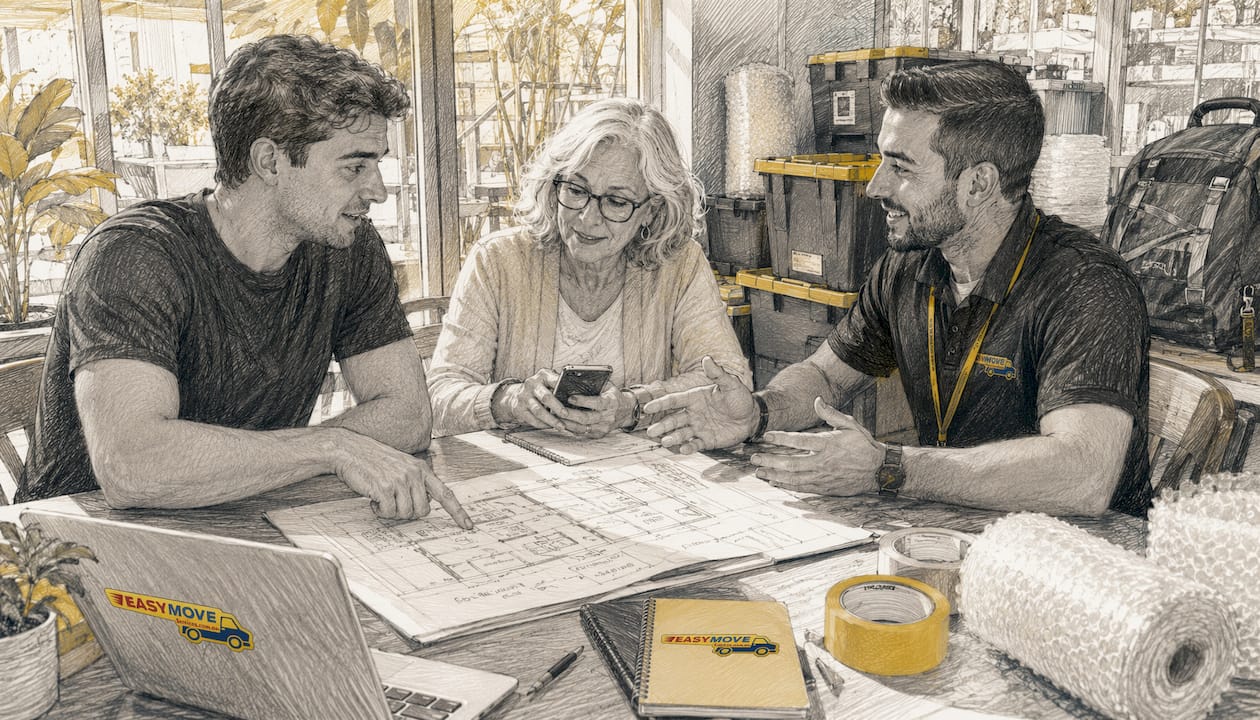
Every adapted move starts with a thorough assessment, not a generic quote over the phone. A quality provider will conduct an in-home or virtual survey to understand your mobility needs, the layout of both properties, and any access challenges such as narrow doorways, stairs, or lift restrictions. From that survey, they build an accessible floor plan for the new home so furniture placement supports your independence from day one.
Coordination with your support network is built into this stage. That means looping in carers, family members, and NDIS plan managers so everyone understands the timeline and their role. Adapted moving providers often act as a single point of contact between real estate agents, facility staff, and the moving crew, which takes a real load off you and your family.
The emotional side of relocating with a disability is real and often underestimated. Sorting through belongings, deciding what to keep, and leaving a familiar home can trigger significant anxiety. A patient, no-pressure approach to downsizing and sorting is part of what separates a genuinely adapted service from a standard removalist who simply moves faster.
Pro Tip: Ask your provider whether their assessment produces a written, binding estimate. Verbal quotes leave room for surprises on moving day, and a binding document protects you.
- In-home or virtual survey covering mobility, access, and layout
- Accessible floor plan designed for the new property
- Coordination with NDIS plan managers, carers, and family
- Patient, compassionate approach to sorting and downsizing
- Written move plan with confirmed scope and timeline
How adapted movers handle specialty and mobility equipment
Mobility and medical equipment needs careful thought before a single box is packed. Items like electric hospital beds, ceiling hoists, and powered wheelchairs cannot simply be wrapped in a moving blanket and loaded onto a truck. Specialised technicians separate from the regular moving crew are typically required to safely disassemble, transport, and recalibrate this equipment at the destination.
A good adapted moving provider will coordinate directly with your equipment suppliers or healthcare providers to arrange those technicians. They do not guess at disassembly or attempt recalibration themselves. For fragile or high-value medical devices, custom crating is often the right call, providing rigid protection that standard moving blankets cannot match.
For practical guidance on moving medical equipment safely, EasyMove Services has a dedicated resource on transporting medical equipment that walks through the key steps.
- Electric hospital beds and ceiling hoists: require specialist technicians
- Powered wheelchairs and scooters: battery isolation and secure loading protocols
- Oxygen concentrators and ventilators: coordination with equipment providers before move day
- Fragile medical devices: custom crating rather than standard wrapping
- Sensitive electronics and communication aids: climate-controlled transport where needed
What additional services and professional standards look like
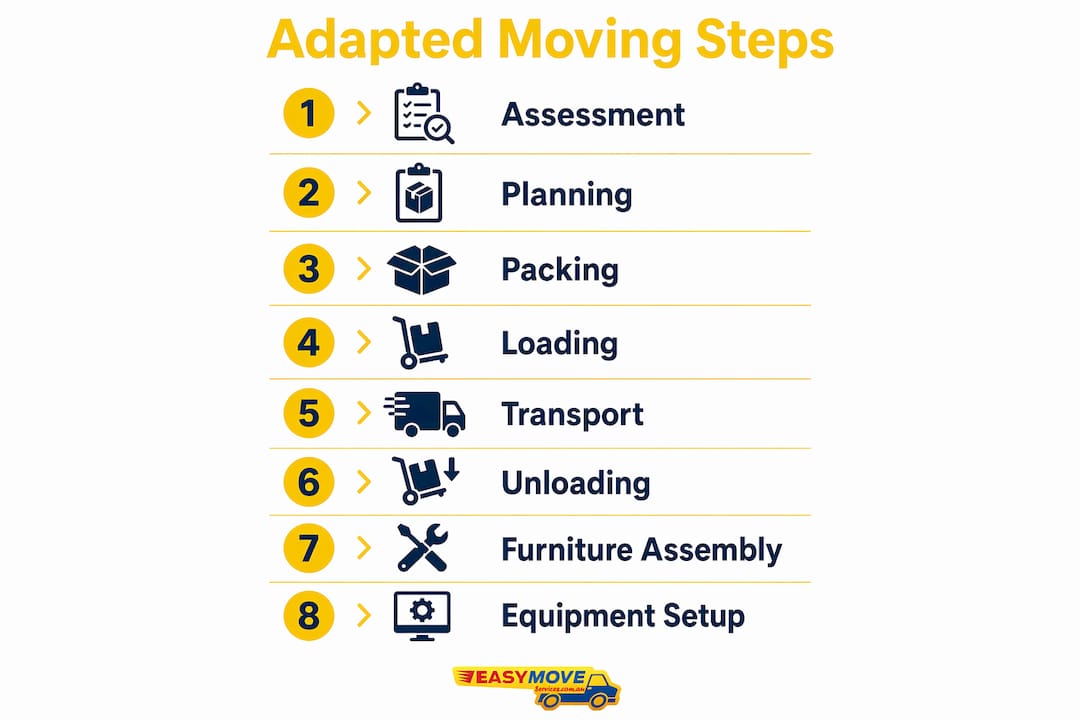
Full-service adapted moves are built from five core blocks: planning and survey, packing and protection, loading and transport, unloading and setup, and optional extras. Those optional extras are where adapted services often differ most from standard removalists, and where the real value for people with disabilities shows up.
Climate-controlled storage is a common addition, particularly when a new home needs modifications before you move in. Debris removal and full unpacking, where the crew organises cupboards and sets up each room rather than just placing boxes, can make an enormous difference to someone who cannot manage that work independently. Professional unpacking varies widely between providers: some set up kitchens and bathrooms completely, others leave boxes in rooms and walk away. Get the scope in writing before you book.
Professionalism matters as much as the service list. Reputable providers use their own trained employees rather than subcontractors, which keeps the standard of care consistent throughout your move. Insurance coverage for goods in transit and public liability are non-negotiables. For experienced movers working with seniors and people with disabilities, familiarity with challenging access situations, such as narrow corridors or shared-building lifts, is part of the job, not an afterthought.
Communication protocols matter too. A dedicated point of contact, clear updates on the day, and a process for on-the-day changes give you and your carers confidence that nothing will fall through the cracks.
- Climate-controlled storage for pre-move or post-move needs
- Full unpacking and room setup, not just box placement
- Debris removal and packing material disposal
- Trained, directly employed crews rather than subcontracted labour
- Goods-in-transit and public liability insurance
- On-the-day communication and emergency assistance protocols
How to choose an adapted moving service provider in Australia
The terms “full service” and “adapted service” are not regulated in Australia, so two providers using the same language can offer very different things. The safest approach is to insist on a binding written estimate produced from an in-home or virtual survey, with the scope of unpacking, specialty item handling, and NDIS coordination spelled out explicitly.
Check whether the provider has direct experience with disability-specific moves. Ask how they handle mobility equipment, whether they use their own crew or subcontractors, and what their process is when something unexpected comes up on moving day. Providers who have worked within the NDIS system understand plan budgets, support categories, and the documentation you may need for reimbursement.
Insurance and flexibility round out the checklist. Confirm that goods-in-transit cover applies to medical and mobility equipment, not just standard household items. A provider worth trusting will also offer post-move follow-up, checking in after the move to address anything that needs adjusting in the new space. For long-distance or interstate moves, the complexity increases, and choosing the right interstate removalist becomes even more important.
- Binding written estimate from a home or virtual survey
- Documented experience with disability and NDIS-funded moves
- Own trained employees, not subcontractors
- Clear scope for unpacking, assembly, and specialty equipment
- Goods-in-transit insurance covering medical items
- Post-move follow-up and flexibility for on-the-day changes
Why EasyMove Services stands out for adapted moves in Australia
EasyMove Services combines live tracking technology with personalised moving and packing services, including support for NDIS participants. Real-time tracking means you, your carers, or your family can see exactly where your belongings are throughout the move, which removes a significant source of anxiety for people who cannot be physically present at every stage.
The team at EasyMove Services is experienced in accessible moving solutions and works within NDIS plan structures, helping participants understand which support categories apply to relocation costs. Their NDIS removalist service is designed specifically for participants who need a provider that understands both the logistical and administrative sides of a funded move.
Beyond the move itself, EasyMove Services publishes practical removalist advice covering everything from packing fragile items to managing the psychology of moving, which is particularly relevant for people with disabilities navigating a stressful transition. Their approach treats every move as an operational project, with trained crews, insured equipment, and a client-centred focus from first contact through to post-move follow-up.
For high-value or specialty items, EasyMove Services also provides guidance on moving high-value items safely, which applies directly to medical equipment and assistive technology.
- Live tracking technology for full transparency during transit
- NDIS-funded moving services with plan coordination support
- Trained, insured crews experienced in disability-specific moves
- Accessible floor plan design and post-move follow-up
- Published moving tips and resources for people with disabilities and carers
Key takeaways
Adapted moving services in Australia cover personalised planning, packing, transport, specialty equipment coordination, and NDIS support, making them fundamentally different from standard removalist services.
| Point | Details |
|---|---|
| Core services included | Packing, loading, transport, unloading, furniture assembly, and accessible floor plan setup are standard in adapted moves. |
| Specialty equipment needs separate experts | Electric hospital beds, hoists, and powered wheelchairs require specialist technicians, not standard moving crews. |
| Get scope in writing | “Full service” and “adapted service” are unregulated terms; a binding written estimate protects you from surprises. |
| NDIS coordination matters | Quality providers work within NDIS plan structures and help with documentation for funded moves. |
| Trained crews over subcontractors | Directly employed, trained staff deliver more consistent care than subcontracted labour for disability-specific moves. |
FAQ
What does an adapted moving service include?
An adapted moving service includes personalised planning, packing, loading, transport, unloading, furniture assembly, and coordination with support networks such as NDIS plan managers. Optional extras typically cover storage, full unpacking, debris removal, and specialty equipment handling.
Do adapted movers assemble furniture after the move?
Yes, reputable adapted moving providers reassemble furniture they have disassembled, including bed frames and shelving units. Confirm this is included in your written contract, as the scope varies between providers.
What are red flags to watch for in adapted movers?
Avoid providers who cannot produce a binding written estimate from a home or virtual survey, use subcontracted crews without disclosure, or cannot explain how they handle NDIS funding and specialty medical equipment.
What is another name for adapted moving services?
Adapted moving services are also called accessible moving services, disability-specific moving services, or NDIS moving services in Australia. The core meaning is the same: relocation support tailored to the needs of people with disabilities or special needs.
Can NDIS fund an adapted moving service?
NDIS funding can cover certain relocation supports depending on your plan and support categories. A provider experienced in NDIS moves, such as EasyMove Services, can help identify which costs may be claimable and what documentation you need.
Recommended
- Why Accessible Moving Services Matter For Everyone
- Empowering NDIS-Funded Moving Services By EasyMove
- Why Choose Tracked Moving Services For Your Relocation
- Moving Tips & Removalist Advice | EasyMove Services