

Accessible moving services are specialised relocation solutions designed to support people with disabilities or mobility limitations by addressing unique accessibility needs throughout the entire moving process. Why accessible moving services matter becomes clear when you consider that 1 in 4 adults live with a disability, representing a vast portion of the population who face barriers that standard removalists simply are not trained to handle. These services go well beyond lifting boxes. They address physical safety, emotional wellbeing, and logistical precision in ways that protect both the person moving and the things they depend on daily. For families coordinating a move for a loved one with a mobility challenge, the difference between a standard move and an accessible one is the difference between a stressful ordeal and a safe, dignified transition.
Why accessible moving services matter for people with disabilities
Relocation is physically and emotionally demanding for anyone. For people with disabilities or mobility challenges, the risks multiply quickly without the right support in place.
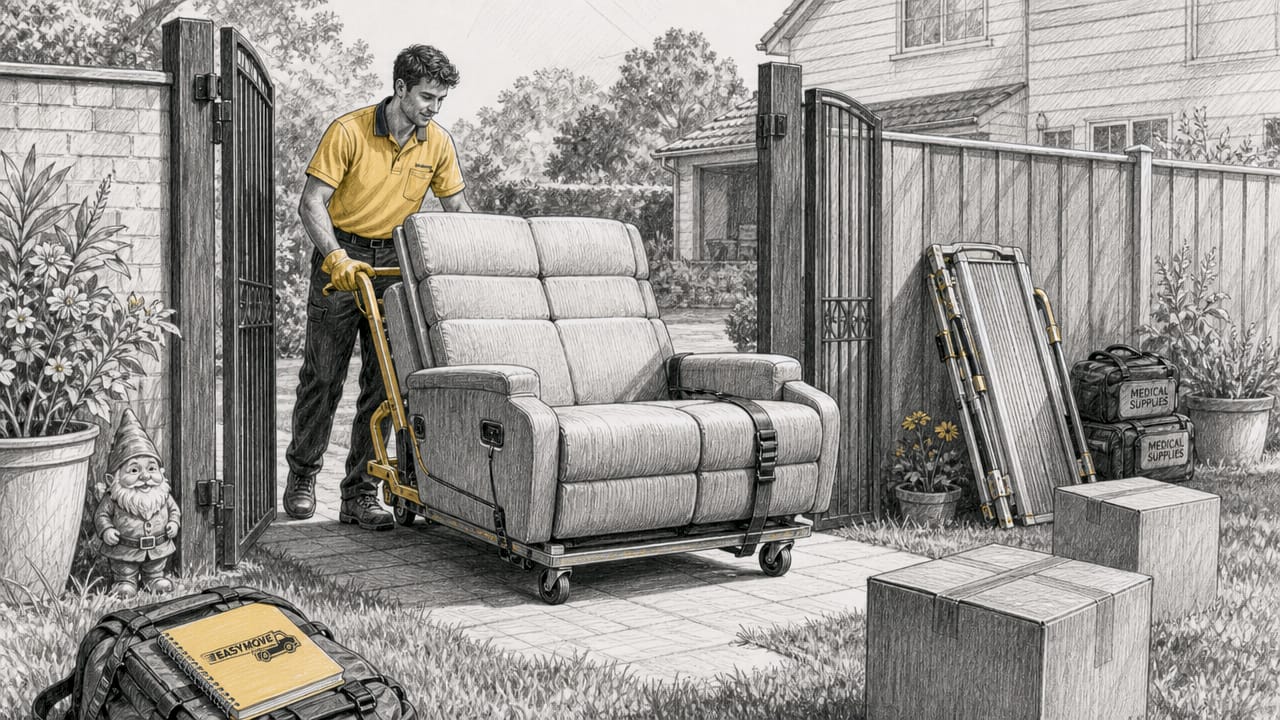
Physical barriers are the most visible problem. Narrow doorways, awkward furniture placement, and inaccessible transport vehicles can all turn a straightforward move into a hazardous one. Standard interior doors are typically at least 30 inches wide, but wheelchair users require a minimum of 36 inches of clearance to move safely. That gap in measurement, if overlooked, causes delays, unsafe workarounds, and real injury risk.
The emotional toll is equally significant. Disruption to familiar routines, sensory overload from noise and activity, and the loss of a known environment can cause genuine distress, particularly for people with cognitive disabilities or chronic health conditions. Standard moving companies often overlook critical timing and communication needs for individuals managing ongoing health conditions, which compounds that stress unnecessarily.
Accessible relocation solutions address these challenges by building a structured, paced plan from the outset. The goal is to remove barriers before they appear, not scramble to fix them on move day.
Common challenges that accessible services address include:
- Narrow or non-compliant doorways and corridors at both the origin and destination
- Lack of accessible transport vehicles for wheelchairs and mobility aids
- Cognitive overload from unstructured or rushed move timelines
- Risk of injury when individuals are asked to participate beyond their physical capacity
- Poor communication between removalists, families, and healthcare support workers
Pro Tip: Ask your accessible mover to conduct a site visit at both properties before move day. Identifying physical barriers early prevents costly and stressful last-minute problem-solving.
What features set accessible moving services apart?
The practical differences between accessible and standard moving services are specific and measurable. Knowing what to look for helps you choose the right provider with confidence.
Pre-move accessibility assessments
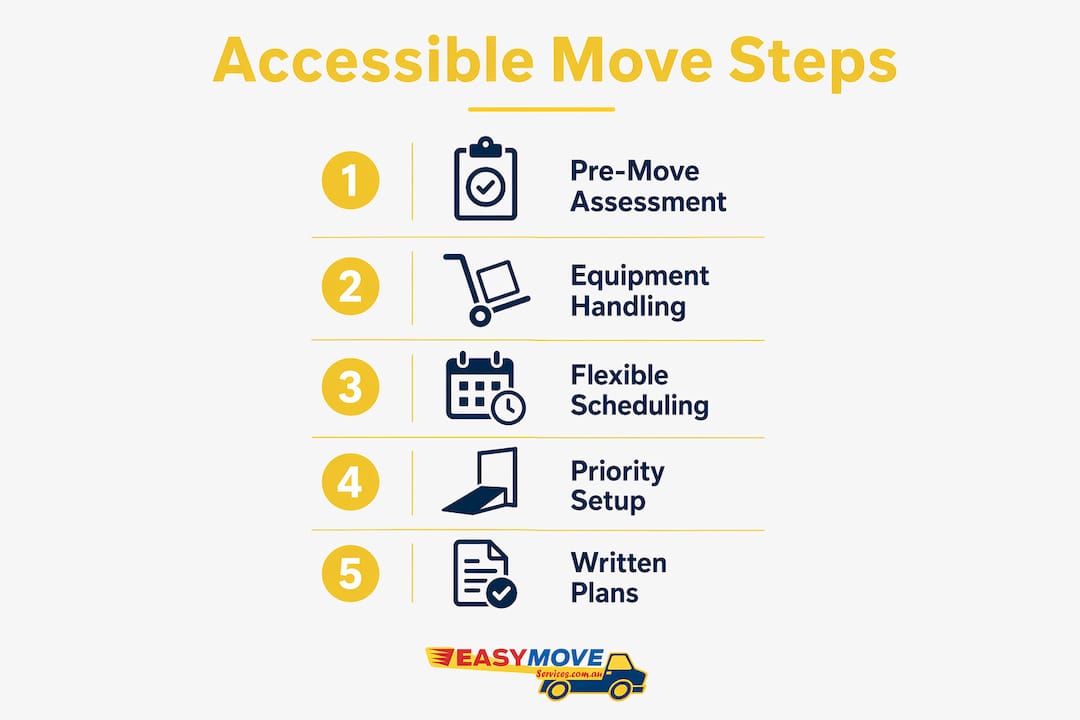
A thorough assessment of both properties is the foundation of any well-run accessible move. This means measuring doorways, hallways, and turning spaces to confirm that mobility aids, wheelchairs, and medical equipment can move through safely. Without proper measurement of entryways and turning spaces at both locations, moves face significant delays and unsafe workarounds. That kind of preparation is not optional. It is the baseline for a safe outcome.
Safe handling of assistive and medical equipment
Wheelchairs, walkers, hospital beds, and oxygen concentrators are not ordinary furniture. Specialised movers handle assistive devices and medical equipment with trained care, ensuring continuity of function and reducing the risk of damage. A damaged wheelchair on move day is not an inconvenience. It is a health and safety emergency. Trained crews understand this distinction and treat these items accordingly. EasyMove Services, for example, provides specific support for transporting medical equipment as part of its accessible moving offering.
Flexible scheduling
Moving with disabilities requires flexible scheduling to accommodate medical appointments, rest schedules, and a slower pace than standard moves. A good accessible mover builds this into the plan from the start, not as an afterthought. EasyMove Services offers flexible moving schedules specifically designed for clients managing health and mobility needs.
Priority room setup at the destination
Accessible movers recommend assembling the bedroom and bathroom first at the destination for safety and autonomy immediately upon arrival. This is a practical decision grounded in real risk management. A person with mobility limitations needs a safe place to rest and access bathroom facilities from the moment they arrive. Setting up the living room first is a standard mover’s instinct. Setting up the bedroom and bathroom first is an accessible mover’s discipline.
Written communication and detailed move plans
Clear, written move plans reduce confusion and anxiety for individuals with cognitive disabilities or communication differences. A detailed schedule, shared in advance with the client, their family, and any support workers, keeps everyone aligned and reduces the chance of distressing surprises on the day.
Pro Tip: Request a written move plan at least one week before the move date. Share it with your support worker or caseworker so everyone involved knows the sequence, timing, and key contacts.
How to prepare effectively for an accessible move
Preparation is where most accessible moves succeed or fail. The more thoroughly you document needs and coordinate logistics in advance, the smoother the day runs.
Start by creating a documented needs profile. This is a written summary of the person’s mobility requirements, medical equipment, daily routines, and communication preferences. Share it with your moving crew, building management at both properties, and any support workers involved. This single document prevents the most common communication breakdowns on move day.
Packing strategy matters more than most families realise. Daily-use medical supplies and medications must remain accessible and never packed into the main moving load. Keep these items in a clearly labelled bag that travels with the person, not in the truck. Most move-day delays and safety issues arise from failing to measure doorways and turning spaces, or from packing critical medical items into the main load. Both errors are entirely preventable. For practical guidance on packing for seniors and mobility-limited individuals, the seniors packing guide from EasyMove Services covers the key steps clearly.
Coordinate with building management at both properties well in advance. Confirm lift access, loading dock availability, and any time restrictions on moving activity. If the destination property requires accessibility modifications, such as grab rails or ramp installation, schedule these before move day so the space is ready when you arrive.
Key preparation steps include:
- Document the person’s mobility aids, medical equipment, and daily routine in writing
- Keep medications and daily-use supplies in a separate, clearly labelled bag
- Measure doorways and turning spaces at both properties before booking
- Confirm lift and loading access with building management at both ends
- Schedule any home modifications at the destination to be completed before arrival
- Brief your support worker or caseworker on the move timeline and key contacts
What safety measures protect you in the first days after moving?
The post-move period carries its own risks, and the first 24 hours are the most critical. The first 24 hours in a new home bear the highest risk for falls, particularly for seniors and people with mobility limitations. An unfamiliar layout, combined with fatigue from the move itself, creates real hazard. This is not a reason to delay moving. It is a reason to plan the post-move setup with the same care as the move itself.
Set up night lights in the bedroom, hallway, and bathroom before the first night. Remove throw rugs and any loose items from walkways immediately. Familiarise the person with the new layout gradually, starting with the rooms they will use most in the first 24 hours. Experienced accessible movers prioritise bedroom and bathroom setup as the first unpacking steps, which directly supports this safety goal.
Ongoing support systems matter beyond the first day. Schedule a check-in with the person’s GP or healthcare provider within the first week after the move. Changes in environment can affect medication routines, sleep patterns, and mental health. Catching these early prevents them from becoming serious problems.
Pro Tip: Walk through the new home with the person before the moving crew leaves. Confirm that all mobility aids are in place, the bathroom is fully set up, and the bed is made. Do not leave these tasks for later.
Post-move safety checklist:
- Install night lights in the bedroom, hallway, and bathroom on day one
- Remove all throw rugs and loose mats from walkways immediately
- Confirm all mobility aids and assistive devices are functional and in position
- Walk through the layout together before the moving crew departs
- Schedule a GP or healthcare provider check-in within the first week
The detail that most people overlook
Working in accessible relocation, the thing I notice most is not the big logistical challenges. Those get planned for. The thing that catches families off guard is the rhythm of the day itself.
Standard moves run fast. Crews are trained to work quickly, and speed is usually a selling point. But for someone managing fatigue, chronic pain, or cognitive load, a fast-moving crew can feel overwhelming and disorienting. The pacing of an accessible move is deliberate. It builds in rest breaks, keeps the person informed at each stage, and avoids the kind of rushed decision-making that leads to errors.
Accessible moving is a proactive strategy that focuses on removing physical and cognitive barriers through early planning, structured timelines, and clear communication with all parties. That definition captures something real. The best accessible moves I have seen treat the day like an operational project, not a transport task. Every sequence is planned. Every handover is communicated. And the person moving feels like the priority, not an afterthought.
The families who get the best outcomes are the ones who communicate clearly and early. Tell your mover everything. The medical equipment, the rest needs, the communication preferences, the anxiety triggers. A good accessible mover uses all of that information. A standard mover does not know to ask.
— EasyMovers
EasyMove Services: built for accessible, dignified relocations
EasyMove Services provides personalised moving and packing services for individuals with disabilities, mobility challenges, and NDIS participants across Australia. Every move is planned around the client’s specific needs, with trained crews who understand how to handle medical equipment, mobility aids, and sensitive personal items with care.
Flexible scheduling means your move fits around medical appointments and rest needs, not the other way around. EasyMove Services also supports NDIS-funded moves, making accessible relocation available to participants who qualify for funding. Whether you need full-service packing and unpacking or simply a crew that understands the importance of getting the bedroom set up first, EasyMove Services is ready to help. For guidance on moving high-value and sensitive items, the EasyMove Services resource library covers the process in clear, practical steps.
Key takeaways
Accessible moving services reduce physical risk, emotional strain, and costly last-minute adjustments by building a structured, paced plan that anticipates needs and prioritises safety from the first assessment to the final room setup.
| Point | Details |
|---|---|
| Pre-move assessment is non-negotiable | Measure doorways and turning spaces at both properties before booking to prevent delays and unsafe workarounds. |
| Medical items travel separately | Keep medications and daily-use supplies in a labelled bag with the person, never in the main moving load. |
| Bedroom and bathroom come first | Setting up these two rooms at the destination immediately supports safety, rest, and autonomy upon arrival. |
| Flexible scheduling protects health | Build rest breaks and medical appointment windows into the move timeline from the outset. |
| The first 24 hours carry the highest fall risk | Install night lights and remove loose rugs before the first night in any new home. |
FAQ
What are accessible moving services?
Accessible moving services are specialised relocation solutions that address the physical, logistical, and emotional needs of people with disabilities or mobility limitations. They include pre-move assessments, flexible scheduling, trained equipment handling, and priority room setup at the destination.
Why do disability-friendly movers matter more than standard removalists?
Standard removalists are trained for speed and general logistics, not for the specific timing, communication, and equipment needs of people with disabilities. Accessible movers build these requirements into every stage of the plan, reducing risk and preserving dignity throughout the process.
How should medical equipment be handled during a move?
Medical equipment and assistive devices must be handled by trained crew members who understand their function and fragility. Daily-use items and medications must never be packed into the main load. They should travel separately with the person to ensure immediate access upon arrival.
What is the biggest safety risk after an accessible move?
The first 24 hours in a new home carry the highest fall risk for seniors and people with mobility limitations. Installing night lights, removing loose rugs, and walking through the new layout before the moving crew leaves are the three most effective ways to reduce that risk.
Does EasyMove Services support NDIS participants?
EasyMove Services provides moving and packing services for NDIS participants, with flexible scheduling and trained crews experienced in handling mobility aids and medical equipment. NDIS-funded moves are available for eligible participants across Australia.
Recommended
- Professional Packing Services For A Cost-Effective Move
- Why Reliable Movers Matter For Families: 2026 Guide
- Professional Movers For Large Families: A Smart Move
- Why Renters Need Moving Help: A Practical Guide