

Careful moving of nursery furniture is defined as the deliberate, planned handling of cribs, change tables, wardrobes, and shelving to prevent structural damage and maintain a safe environment for infants. This is not simply a transport task. It is an operational project that protects both your child’s safety and the integrity of furniture designed to specific safety standards. Forcing assembled furniture through tight spaces is the primary cause of moving damage, stressing joints and legs until they crack or snap. Understanding why nursery furniture needs careful moving gives you the foundation to plan every step correctly, whether you are relocating across the street or across the state.
What risks does improper moving pose to nursery furniture?
Nursery furniture is uniquely vulnerable during a move. Cribs, change tables, and shelving units are built to strict safety tolerances. Any structural compromise, even a hairline crack in a crib rail, creates a direct hazard for an infant.
Furniture damage accumulates from small repeated impacts rather than single catastrophic events. A corner clipping a door frame, a leg dragging across a hallway floor, a shelf unit tilting on a trolley. Each contact chips away at the furniture’s integrity. By the time you notice visible damage, the structure may already be weakened.
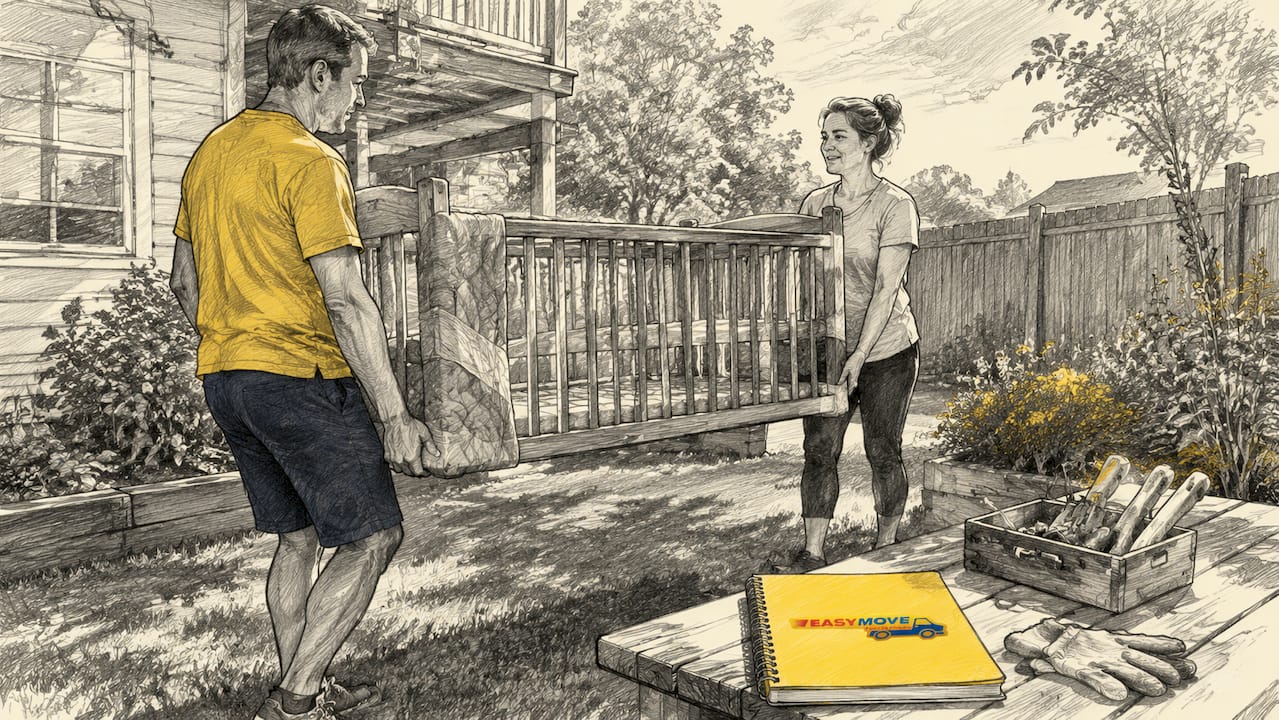
Road vibrations during transit add another layer of risk. Vibrations travel through the truck bed and into every joint, screw, and dowel. Nursery furniture with particleboard construction is especially susceptible because the material compresses and loosens around fixings over time. A crib that arrives with a wobbly rail is not safe to use without a full inspection.
Tipping is the most immediate physical danger. A tall wardrobe or bookshelf that is not properly secured can fall on a mover or, worse, on a child if it is unstable after reassembly. The risks of safely relocating baby furniture are real and preventable with the right approach.
- Cracked or snapped joints from forcing assembled pieces through doorways
- Loose fixings caused by road vibration during transit
- Tipping hazards from improperly loaded or unsecured furniture
- Floor and wall damage from dragging or uncontrolled movement
- Compromised safety ratings on cribs and change tables after structural stress
Pro Tip: Inspect every crib joint, rail, and fixing point immediately after the move, before reassembling or placing your baby in it. Do not assume the furniture is safe just because it looks intact.
Why does disassembly and preparation of nursery furniture matter?
Disassembling nursery furniture before a move is one of the most effective ways to reduce damage risk. Removing protruding parts lowers the centre of gravity and protects joints from vibration damage during transit. A crib with its legs removed sits flat, travels securely, and arrives without the stress that an assembled piece would absorb.
Disassembly also protects the people doing the moving. Breaking down furniture reduces physical strain by turning an awkward, heavy piece into manageable components. A fully assembled wardrobe is difficult to grip, hard to angle through a doorway, and puts enormous pressure on your back. Separated panels are far easier to carry safely.
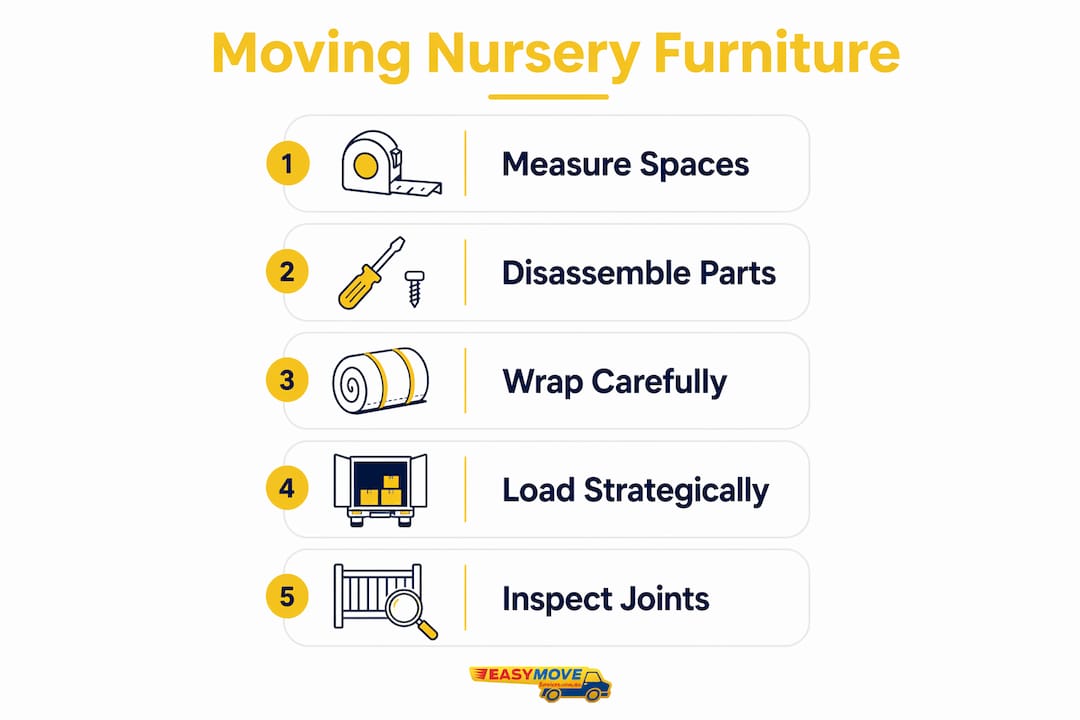
There are situations where disassembly is not the right call. Antique nursery furniture with aged joints can be damaged by disassembly if the fixings are fragile. Furniture made from solid hardwood with complex joinery may be better moved assembled with extra padding. In these cases, wrapping the piece thoroughly and using a furniture dolly is the safer alternative.
Clear all shelves and remove loose items from nursery furniture before moving. This lowers the centre of gravity and prevents objects from shifting and causing a tip. An empty change table is dramatically more stable than one with nappy supplies still in the drawers.
- Remove legs, casters, and shelves where the manufacturer allows it
- Keep all hardware together in a labelled zip-lock bag taped to the main piece
- Wrap disassembled panels individually to prevent surface scratching
- Do not disassemble antique or fragile joinery without professional advice
- Empty all drawers and shelves before lifting any piece
Pro Tip: Photograph each piece of furniture from multiple angles before disassembly. This gives you a clear reference for reassembly and documents the condition of the furniture before the move.
Best practices for protecting nursery furniture during transit
Protecting nursery furniture during transit requires a layered approach. Effective furniture protection uses a three-layer system: preservation using acid-free paper or fabric, shock absorption using moving pads and blankets, and structural shielding using cardboard corners and stretch wrap. Each layer serves a distinct purpose, and skipping any one of them increases the risk of damage.
The correct wrapping sequence
Start with acid-free paper or a clean cotton sheet directly against the furniture surface. This preserves the finish and prevents chemical reactions between plastic wrap and timber. Plastic wrap applied directly to wood traps moisture, which causes swelling, warping, and finish damage over time. The preservation layer goes on first, always.
The second layer is shock absorption. High-density moving pads and furniture blankets cushion the piece against bumps and vibrations during transit. Wrap the entire piece, paying extra attention to corners and protruding hardware. Secure the blankets with packing tape applied only to the blanket, never directly to the furniture surface.
The third layer is structural shielding. Cardboard corner protectors guard the most vulnerable points, and a final wrap of stretch wrap holds everything together and keeps the padding in place. This outer layer resists road vibration and prevents the padding from shifting during the journey.
Loading and securing in the vehicle
| Step | Action | Why it matters |
|---|---|---|
| Tier loading | Place heaviest items on the floor, lighter pieces on top | Prevents crushing and reduces tipping risk |
| Vertical positioning | Stand mattresses and flat panels upright against the truck wall | Reduces floor space use and prevents warping |
| Logistics straps | Secure every large piece to the truck wall anchor points | Stops furniture shifting during braking and cornering |
| Padding between pieces | Place blankets between all items in contact | Prevents surface-to-surface scratching |
| Route planning | Measure doorways, hallways, and stairwells before moving day | Avoids forced manoeuvring that damages joints |
Avoid placing nursery furniture near the truck doors where it is most exposed to movement and temperature changes. The front of the truck, closest to the cab, is the most stable position for fragile or high-value pieces. For guidance on protecting furniture in transit, thorough preparation before loading day makes the biggest difference.
How do you safely move nursery furniture within the home?
Safe physical handling starts before you lift anything. Measure every doorway, hallway, and stairwell the furniture needs to pass through. A crib that is 90cm wide will not pass through a 85cm doorway assembled. Knowing this before moving day saves you from the most common source of damage: forcing a piece through a space that is too small.
Remove all drawers and empty all storage before lifting any piece. This reduces weight significantly and prevents drawers from sliding out mid-carry. Many moving injuries occur from underestimating the weight of furniture or skipping proper equipment. A change table with full drawers is heavier than it looks and shifts unpredictably when lifted.
Use the right equipment. Furniture dollies, floor sliders, lifting straps, and work gloves are not optional extras. They are the tools that prevent both personal injury and furniture damage. Sliders placed under furniture legs allow you to reposition pieces across hard floors without dragging, which protects both the floor and the furniture base.
Safe lifting posture is non-negotiable. Bend your knees, keep the piece close to your body, and lift with your legs rather than your back. Communicate clearly with anyone helping you, calling out direction changes and obstacles before they happen. Avoid dragging furniture at all costs. Dragging causes cumulative damage to legs, bases, and floors that adds up quickly.
- Measure all pathways before moving day, including stairwell width and ceiling height
- Remove doors from hinges if a piece is close to the doorway width
- Use furniture sliders on hard floors to reposition without dragging
- Lift with two people for any piece over 20kg
- Call out direction changes to your helper before moving, not during
When should you consider professional help for moving nursery furniture?
Professional movers are the right choice when the furniture, the space, or your physical capacity makes a DIY move genuinely risky. Heavy nursery wardrobes, oversized cribs, and multi-piece nursery sets fall into this category. The common mistakes when moving furniture that cause the most damage almost always involve underestimating the complexity of the job.
Stairs, tight hallways, and fragile flooring are the three scenarios where professional experience matters most. Carrying a wardrobe down a narrow staircase requires specific techniques, equipment, and coordination that most parents do not have on hand. Getting it wrong risks injury to you and serious damage to the furniture and the stairwell.
Valuable or antique nursery furniture deserves professional handling. A heritage crib or a custom-made change table cannot be replaced if it is damaged. Professionals bring specialised equipment including furniture dollies, stair climbers, and heavy-duty padding that is simply not practical for a one-off DIY move.
- Heavy or bulky pieces that require two or more people to lift safely
- Stairwells and tight hallways where manoeuvring requires technique and experience
- Antique or high-value furniture where damage risk outweighs the cost of professional help
- Physical limitations that make safe lifting genuinely difficult
- Complex disassembly required for large modular nursery sets
Key takeaways
Careful handling of nursery furniture at every stage, from disassembly through transit to reassembly, is the single most effective way to protect both the furniture and your child’s safety.
| Point | Details |
|---|---|
| Disassemble before moving | Remove legs, casters, and shelves to lower the centre of gravity and protect joints. |
| Use a three-layer wrapping system | Apply preservation, shock absorption, and structural shielding layers in sequence. |
| Clear all shelves and drawers | Empty furniture before lifting to reduce weight and prevent tipping. |
| Use proper equipment | Dollies, sliders, and lifting straps prevent both injury and furniture damage. |
| Inspect after arrival | Check all joints and fixings before placing a child in any nursery furniture. |
What I have learned from watching parents move nurseries
After working with hundreds of families through EasyMove Services, the pattern is consistent. Parents who plan the nursery move as carefully as they planned the nursery itself have far fewer problems. The ones who treat it as an afterthought, something to sort out on the day, are the ones who end up with a cracked crib rail or a wardrobe that wobbles.
The mistake I see most often is the “it’ll be fine” approach to assembled furniture. Parents carry a fully assembled crib through a doorway, it catches on the frame, and the joint cracks. The crib looks intact. They reassemble it, put the baby in, and do not realise the rail is compromised until it flexes under load. That is not a minor inconvenience. That is a safety issue.
The other thing worth saying plainly: be honest about what you can physically manage. Moving heavy furniture safely requires the right equipment and, often, the right number of people. If you hesitate before lifting something, that hesitation is telling you something. Listen to it. Getting a professional in for the nursery pieces specifically, even if you handle the rest of the move yourself, is a completely reasonable call. No dramas in admitting the job is bigger than one person.
— EasyMovers
EasyMove Services and safe nursery furniture moving
Moving a nursery is one of the most detail-sensitive parts of any relocation. EasyMove Services provides personalised packing and moving support designed to handle exactly this kind of careful work, with real-time tracking so you always know where your furniture is during transit.

Whether you need help with professional packing and moving for your entire nursery set or just the heavy pieces, EasyMove Services works around your schedule and your child’s routine. The team handles disassembly, wrapping, loading, and reassembly with the care that nursery furniture demands. If you are ready to plan your move properly, use the moving quote calculator to get a clear picture of what professional support will cost. Your nursery deserves the same attention to detail you gave it when you set it up.
FAQ
Why does nursery furniture need careful moving?
Nursery furniture is built to precise safety tolerances, and structural damage from careless handling can create direct hazards for infants. Forced manoeuvring through tight spaces, road vibrations, and cumulative minor impacts are the leading causes of damage.
When should I pack the nursery before a move?
Pack the nursery no more than 24–48 hours before the move date to avoid disrupting your infant’s sleep environment and routine.
Should I disassemble nursery furniture before moving?
Disassemble wherever the manufacturer allows, as removing legs, casters, and shelves lowers the centre of gravity and reduces vibration damage during transit. Avoid disassembling antique or fragile joinery without professional advice.
How do I protect nursery furniture during transit?
Use a three-layer system: acid-free paper or fabric against the surface, moving pads for shock absorption, and cardboard corners with stretch wrap for structural shielding. Never apply plastic wrap directly to timber surfaces.
When is it worth hiring professional movers for nursery furniture?
Hire professionals for heavy or bulky pieces, stairwells, tight hallways, or any antique and high-value furniture where the cost of damage outweighs the cost of expert help.
Recommended
- Common Mistakes When Moving Furniture: 2026 Guide
- How Heavy Furniture Gets Moved Safely: A Practical Guide
- How To Prepare Furniture For Movers | EasyMove Services
- How To Protect Furniture During A House Move