

Moving help is the single most effective way for Australian renters to protect their bond, meet lease deadlines, and avoid the physical and financial costs of a poorly managed move. Whether you are leaving a studio apartment in Melbourne or a three-bedroom unit in Sydney, the complexity of a rental move goes well beyond loading boxes into a car. Tight inspection timelines, building access restrictions, and the risk of property damage all make professional or partial moving assistance not a luxury, but a practical necessity. This guide explains why renters need moving help and how to use it wisely.
Why renters need moving help more than homeowners do
Renters operate under a different set of pressures than homeowners. Your lease end date is fixed, your bond is at risk, and your landlord or property manager expects the property returned in documented condition. These constraints make moving assistance for renters a risk-management tool, not just a convenience.
The end-of-lease moving process involves coordinating packing, transport, cleaning, and a final inspection, often within a window of 24 to 48 hours. Miss that window and you risk losing part or all of your bond. Professional movers bring scheduling discipline that most renters simply cannot replicate alone. Callaghan’s Moving Services notes that strategic planning keeps moving day on schedule and reduces the coordinational burden on renters significantly.
The NSW Government requires landlords to provide condition reports at the start of a tenancy. Renters who document with time-stamped photos alongside those reports create a strong evidentiary record for disputing bond deductions. Getting your belongings out cleanly and on time is the first step in building that record.
What challenges do renters face that moving help solves?
Apartment moves present a specific set of logistical obstacles that make DIY moving genuinely risky. Understanding these challenges is the clearest argument for hiring help.
Access restrictions are the most underestimated problem. Many apartment buildings in Sydney, Melbourne, and Brisbane require you to book the service lift in advance, often for a narrow window of two to four hours. If your move runs over time, you lose lift access and the entire operation stalls. George Moving & Storage’s end-of-lease guide highlights that elevator reservation windows and parking access significantly affect apartment move logistics, and early mover booking is the only reliable way to prevent day-of delays.
Physical injury and property damage are real risks when you move bulky furniture through narrow corridors without proper equipment. Callaghan’s Movers detail the physical and mental toll of DIY moving and how professionals with trolleys, furniture blankets, and load-sequencing experience reduce those risks considerably. A scratched timber floor or a gouged wall can cost you hundreds of dollars in bond deductions.
Coordination overload is the third challenge. You are simultaneously managing packing, cleaning, key returns, utility disconnections, and address changes. Adding heavy lifting and truck logistics to that list increases the chance that something gets missed or damaged.
Pro Tip: Book your building’s service lift at least two weeks before your move date. Many buildings in Melbourne’s CBD and inner suburbs have limited availability, and a missed booking can derail your entire schedule.
Hiring movers vs. DIY: which works better for renters?
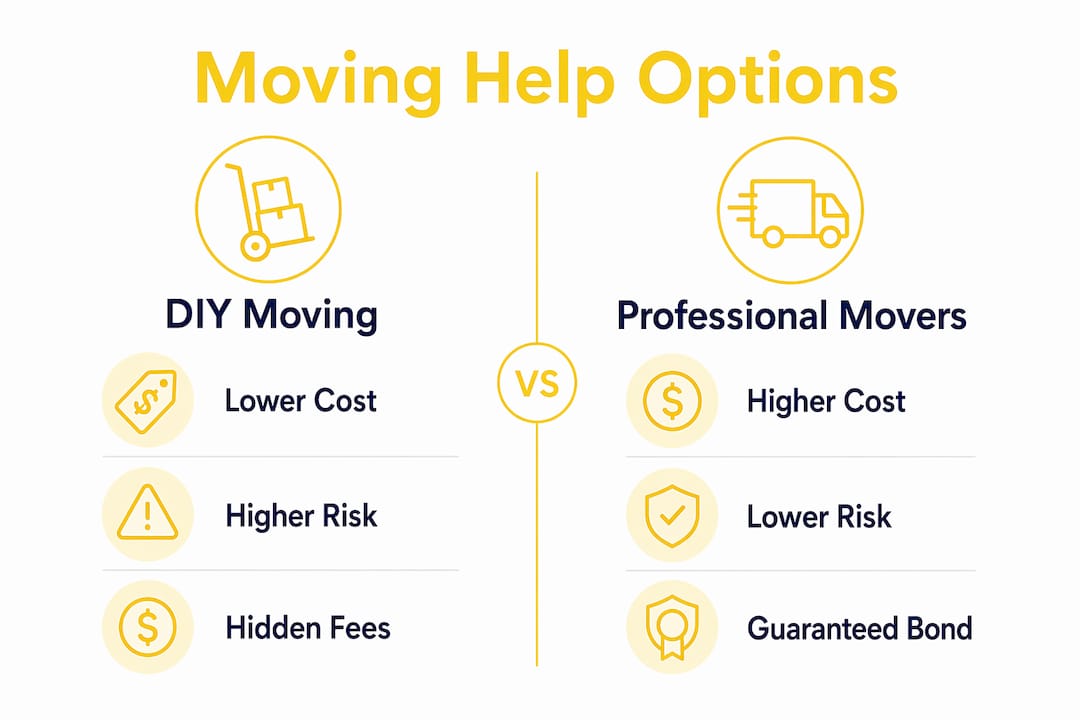
The cost comparison between hiring movers and doing it yourself is rarely as straightforward as it first appears. Most renters underestimate the true cost of a DIY move.
Smart City Locating identifies that hidden DIY moving costs include truck rental, fuel, parking fees, packing supplies, and extra trips when the first load does not fit. Add the time cost of a full weekend and the physical recovery time afterwards, and the gap between DIY and professional moving narrows considerably. For apartment renters in particular, the risk of damage to walls, floors, or furniture in tight stairwells can turn a “cheap” DIY move into an expensive one.
The table below compares the two approaches across the factors that matter most to renters.
| Factor | DIY Moving | Professional Movers |
|---|---|---|
| Upfront cost | Lower | Higher |
| Hidden costs | Truck hire, fuel, parking, supplies | Generally included in quote |
| Time required | Full weekend typical | Half day to one day |
| Injury risk | High, especially with bulky items | Low, with proper equipment |
| Bond risk | Higher if damage occurs | Lower with experienced handlers |
| Flexibility | Full control | Varies by service level |
| Apartment access | Self-managed, easy to mistime | Coordinated by professionals |
The table makes one thing clear: DIY moving trades upfront savings for higher risk across almost every other category. For renters with a bond on the line, that trade-off deserves serious thought.
Pro Tip: Get at least three quotes from local removalists and ask specifically whether they have experience with your building type. A mover who has worked in high-rise apartments will handle lift bookings and parking permits far more efficiently than one who primarily does house moves.
How should renters prepare to use moving help effectively?
Hiring movers is only half the equation. How you prepare before they arrive determines whether the move goes smoothly or turns into a stressful scramble.
Follow these steps to get the most out of your moving assistance.
-
Book your movers and your building access together. Confirm the service lift booking and truck parking permit before you lock in your moving date. George Moving & Storage’s guide confirms that advance coordination for building access is the single most effective way to prevent day-of delays.
-
Document the property condition before you start moving. Walk through every room with your original condition report and take dated photographs of walls, floors, fixtures, and appliances. The NSW Government and independent guides like Anytime Clean confirm that dated exit photos paired with the condition report form the evidentiary basis for disputing any bond deductions your landlord may raise.
-
Sequence your tasks in the right order. Move your belongings out first, then clean. Attempting to clean around furniture or boxes wastes time and produces a poor result. Easymoveservices has a detailed guide on sequencing your end-of-lease clean to protect your bond.
-
Decide your level of help before moving day. Full-service moving covers packing, loading, transport, and unloading. Partial help covers only the tasks you cannot safely manage alone, such as heavy furniture or fragile items. Knowing this in advance lets your movers prepare the right equipment and crew size.
-
Communicate with your property manager early. Confirm the final inspection time and ask whether they require professional cleaning receipts. Some property managers in NSW and Victoria require documented evidence of professional cleaning as a condition of bond release.
What are the most cost-effective moving help options for renters?
Not every renter needs a full-service move. The good news is that the moving assistance market in Australia offers flexible options that let you pay only for what you actually need.
Partial moving help is the most cost-effective approach for renters who are physically capable of managing boxes but cannot safely move large furniture. U-Haul’s Moving Help model demonstrates that selectively hiring for heavy lifting and unloading reduces injury risk while keeping overall costs down. You pack your own boxes, the professionals handle the sofa, the fridge, and the bed frame.
Local removalists generally offer better value than national chains for short-distance apartment moves. A two-person crew for a half-day job in Melbourne or Sydney typically costs less than a full-service booking, and many local operators are familiar with the specific access requirements of buildings in their area.
Packing services are worth considering if you have fragile or high-value items. Professional packers use the right materials and load sequence to prevent breakage in transit. Easymoveservices provides guidance on moving fragile items safely and which belongings genuinely require professional handling.
For renters receiving NDIS support, it is worth noting that some moving services, including those offered by Easymoveservices, are available to NDIS participants. This makes professional moving assistance accessible to a broader group of renters who might otherwise attempt a risky DIY move.
Pro Tip: If budget is tight, hire professionals for loading and unloading only, and handle your own packing and unpacking. This hybrid approach, as outlined in U-Haul’s DIY vs. full-service comparison, cuts costs while eliminating the highest-risk tasks.
Key takeaways
Renters who treat their move as an operational project, not just a transport task, consistently achieve better outcomes, fewer bond disputes, and less physical strain.
| Point | Details |
|---|---|
| Moving help protects your bond | Professionals reduce damage risk and free up time for thorough cleaning and documentation. |
| Apartment access needs advance planning | Book service lifts and parking permits at least two weeks before your move date. |
| DIY costs more than it appears | Hidden expenses like truck hire, fuel, and damage repair often exceed the cost of hiring help. |
| Partial help is a smart middle ground | Hiring movers for heavy items only cuts costs while eliminating the highest-risk tasks. |
| Documentation is your financial protection | Dated photos paired with your condition report are your strongest defence against unfair bond deductions. |
Moving help is a financial decision, not just a practical one
I have spoken with enough renters over the years to know that most people who skip professional help do so because they think they cannot afford it. What they discover afterwards is that they could not afford to skip it.
The bond on a two-bedroom apartment in Melbourne or Sydney can easily sit at $3,000 to $5,000. A scratched floor, a damaged door frame, or a wall scuff that happens during a rushed DIY move can cost you hundreds of dollars in deductions. A professional mover with the right equipment and experience costs a fraction of that. The maths is not complicated.
What I find most renters get wrong is the sequencing. They try to clean while furniture is still in the property, or they hand back the keys before they have finished documenting the condition. Both mistakes weaken your position if a bond dispute arises. Treat the move, the clean, and the inspection as three separate tasks with a clear order, and you will be in a far stronger position.
My honest recommendation is the hybrid approach. Hire professionals for loading, heavy furniture, and anything fragile. Handle your own packing and unpacking. You get the safety and scheduling benefits of professional help without paying for services you do not need. For most renters in Australian capital cities, this approach delivers the best outcome per dollar spent. No dramas.
— John
Ready to move without the stress?
Easymoveservices takes the guesswork out of rental moves by combining personalised moving and packing services with real-time tracking technology, so you always know where your belongings are. Whether you need full-service moving, partial help with heavy items, or a combined moving and cleaning solution for your lease end, Easymoveservices has you covered.

From apartment moves with tight lift windows to high-value item transport and NDIS-supported relocations, the team is equipped to handle the details that matter most to renters. If you are weighing up your options, the full-service vs. DIY comparison on the Easymoveservices website is a practical starting point. Get in touch today and make your next move a straightforward one.
FAQ
Why do renters need moving help more than homeowners?
Renters face fixed lease deadlines, bond obligations, and apartment access restrictions that homeowners do not. Professional moving assistance reduces the risk of delays, property damage, and bond deductions.
How much does partial moving help cost in australia?
Costs vary by city and crew size, but hiring a two-person team for loading and unloading only is typically more affordable than a full-service booking. Getting three local quotes is the most reliable way to find a fair price.
What is the best way to protect your bond during a move?
Take dated photographs of every room alongside your original condition report before and after the move. The NSW Government confirms that time-stamped photo evidence is the strongest protection against unfair bond deductions.
When should i book movers for an apartment move?
Book your movers and your building’s service lift at least two weeks in advance. George Moving & Storage confirms that early booking prevents access delays on moving day, particularly in buildings with limited lift availability.
Is a full-service move worth it for a small apartment?
Not always. For a one or two-bedroom apartment, a partial service covering heavy furniture and fragile items often delivers the best value. U-Haul’s model shows that hiring only for high-risk tasks keeps costs down while protecting you from injury and property damage.
Recommended
- End Of Lease Moving Guide For Renters | EasyMove Services
- Moving To A New Home | Simple Tips For A Smooth Move
- Moving Interstate As A Renter: Your Practical Guide
- How To Save On Your Moving Budget: 4 Best Ways | EasyMove Services